



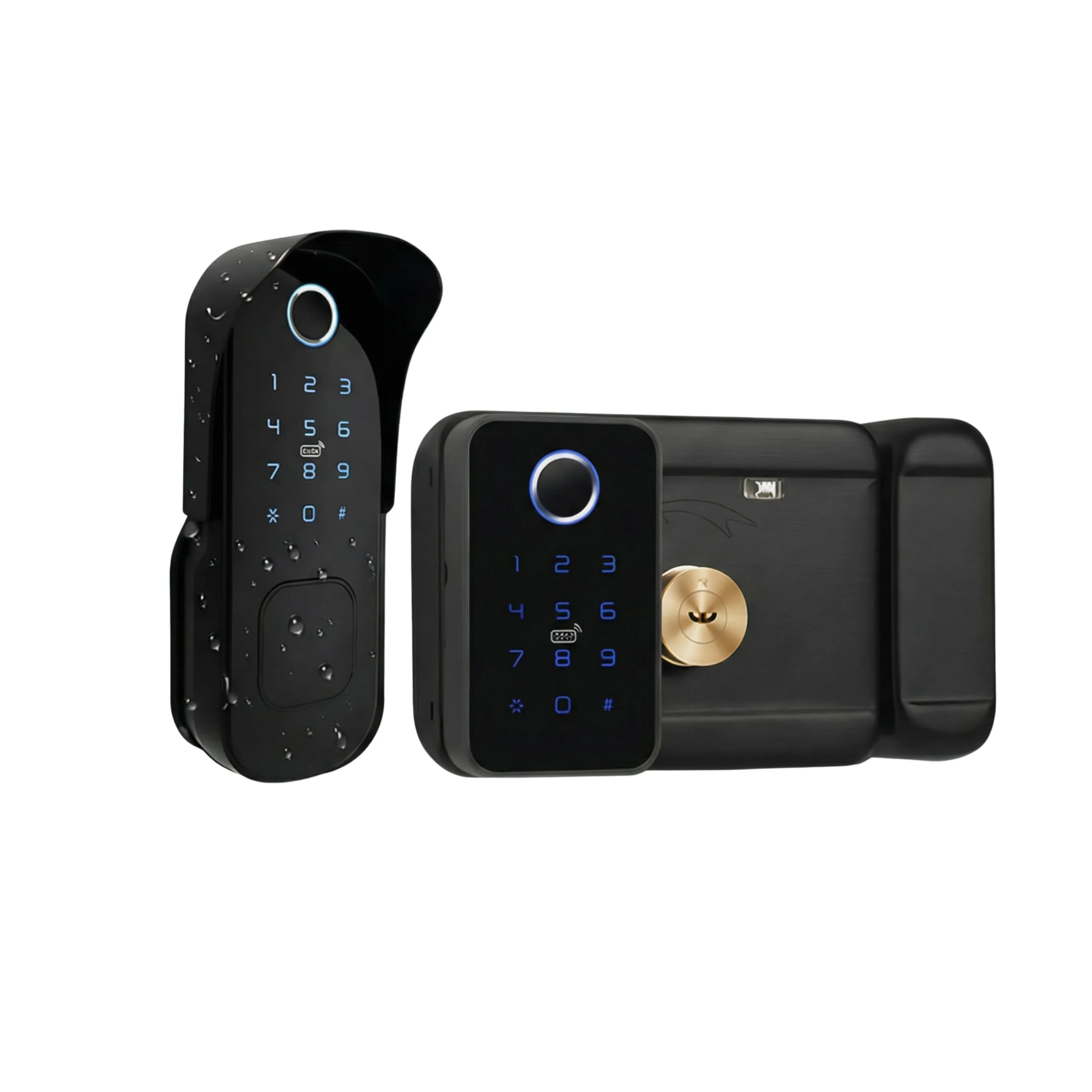
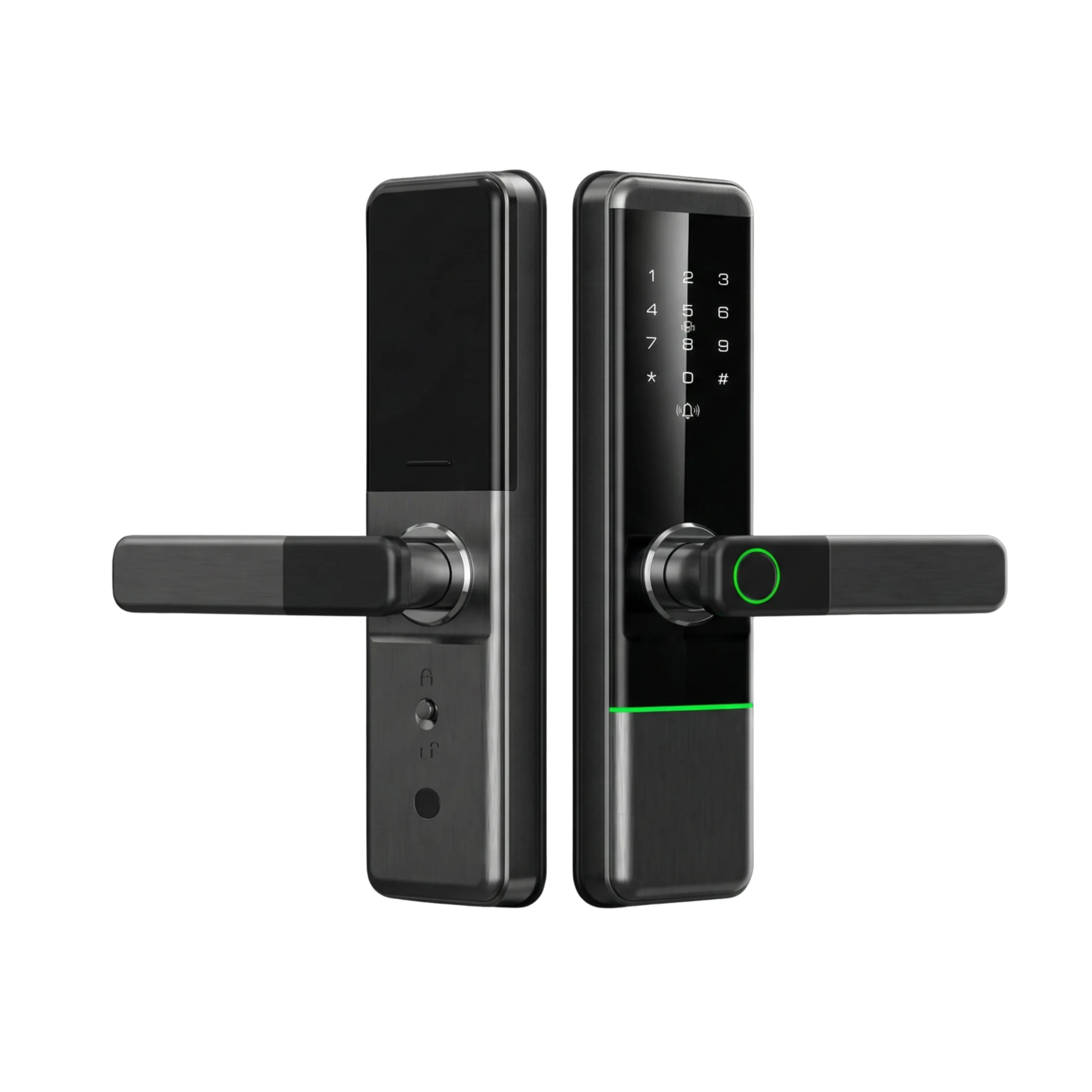









A parcel locker works when the courier can open exactly one compartment, exactly once, without talking to anybody, and the resident can open the same compartment later with a different code. That is two credentials with different lifespans on the same door, and it is the whole design problem. Everything else, the metal, the power, the app, follows from getting that right. Here is what a locker bank actually needs in a UAE building, and where the ones that get ripped out went wrong.
Two users, two very different needs
The courier needs a code that works once, in a narrow window, on one compartment. He has never installed your app and never will. He is standing in a lobby with a scanner in one hand and thirty more drops to make. If the interaction takes longer than a few seconds it will not be used, and parcels will go back to being stacked by the concierge desk.
The resident needs a code that works from the moment the parcel lands until they collect it, which might be the same evening or five days later if they are travelling. They will probably get it by push notification or SMS. They may forward it to a spouse or a housemaid, and your system should treat that as normal rather than a violation.
The mistake is designing one credential type and bending it to cover both. Issue two.
The audit trail is the product
Operators tend to treat the log as reporting. It is not. It is the thing that resolves disputes, and disputes are why lockers get removed.
A resident says the parcel never arrived. The courier says it was delivered. Without a record you have a building management problem and an angry WhatsApp group. With a record you have a timestamp, a compartment number, and which credential opened it.
So specify the log properly from the start. It should show which compartment, which credential, and when. It should distinguish the courier code from the resident code rather than logging both as generic openings. And you should know how quickly it reaches your dashboard, because on a bank with no live connection the answer can be days.
Power and connectivity in a lobby or car park
This decides more than the hardware choice does.
A locker bank in a lobby usually has a socket nearby or can have one added during fit-out. Get the socket into the drawings early, because adding a spur to a finished marble-clad lobby wall in a Dubai tower costs several times what the gateway costs.
A basement car park is harder. Mobile coverage is often poor and building Wi-Fi rarely reaches down there. This is where offline-capable codes matter, meaning codes your system calculates in advance that the lock validates on its own with no connection at all. The bank keeps working. What you lose is live status and the ability to cancel a code mid-window.
Battery-only compartments are viable for small banks and they remove the power problem, but somebody has to own battery replacement across dozens of units. That is a facilities routine, and if nobody is assigned to it you will find out through failures.
Outdoors is a different specification
Delivery boxes at villa gates and locker banks in open-air podiums face conditions that indoor hardware is not built for.
Direct August sun on a dark metal cabinet pushes the surface temperature far above ambient, which shortens battery life and stresses seals and adhesives. Blown sand works into keypads and hinges. On coastal sites in Palm Jumeirah, Al Marjan or Saadiyat, salt air corrodes fixings and the seam between panel and housing, and an IP rating does not cover that. IP testing is about dust and fresh water under pressure, not chloride corrosion.
If the bank is outdoors, specify shading, ask about the fixing and finish materials rather than just the IP number, and plan a maintenance interval. Anything unshaded on a west elevation is the hardest case on the site.
What to ask a supplier before you buy
Can it issue single-use codes that stop working after one opening, or only time-limited codes that anyone can reuse within the window? Those are different things and couriers need the former.
Can codes be generated by our system without a connection to the unit? This determines whether the basement bank works.
How many credentials does each lock store, and what happens when that fills? Most units in this class hold roughly 100 of a given type. With expiring codes that is fine. With an integration writing permanent ones it is a time bomb.
What is the mechanical override, and who holds it? Somebody has to be able to open a compartment when the electronics fail with a resident’s passport inside.
And what is the compartment mix? Sizing is the most common regret. Buildings underestimate large parcels, then a single oversized box occupies the only big compartment for three days.
The operating reality nobody quotes for
Parcels get left in compartments past their window. Residents travel. Somebody has to clear stale items, and there has to be a written rule for how long a parcel sits before the concierge removes it. Decide that policy before installation and put it on the unit, because retro-fitting a policy to annoyed residents is harder than fitting the hardware.
How Altix approaches locker projects
We supply the locking hardware and gateways and survey the site for coverage and power before anything is ordered. We do not build the cabinet or the software, but we work with whoever does, and we bring the access design: two credential types for two user groups, what the log has to capture to settle a dispute, and whether that specific location should run connected or offline. We will tell you plainly when it is offline, because a bank that only works while the building Wi-Fi is up is a bank that gets removed within a year.
Send us the location, the compartment count and whether it is indoor or outdoor on WhatsApp. Scoping is free; supply, installation and any ongoing advisory are quoted separately.
Frequently asked questions
Can a code be limited to a single use?
Yes. One-time codes stop working after they open the compartment once, which is the right credential for couriers. Residents usually get a time-limited code instead so they can return to it.
Does the locker need internet?
Not to function, if you use codes your system calculates in advance. It does need connectivity for live status, remote cancellation and same-day logs. Basement installations often run without it deliberately.
What happens if the electronics fail with a parcel inside?
There should be a mechanical override held by building management. Confirm this exists and confirm who holds the key before installation, not after.
Can couriers use it without an app?
Yes, and they should be able to. A keypad code needs no app, no account and no phone signal in the lobby.
Will an outdoor bank survive a UAE summer?
With shading, appropriate materials and a maintenance interval, yes. Unshaded on a west-facing wall, expect shorter battery life and faster seal wear. On coastal sites ask about fixings and finish, not just the IP rating.
Altix supplies and installs access hardware for parcel lockers, delivery boxes and storage banks across the UAE. Tell us the site and compartment count on WhatsApp for an honest scope.


