


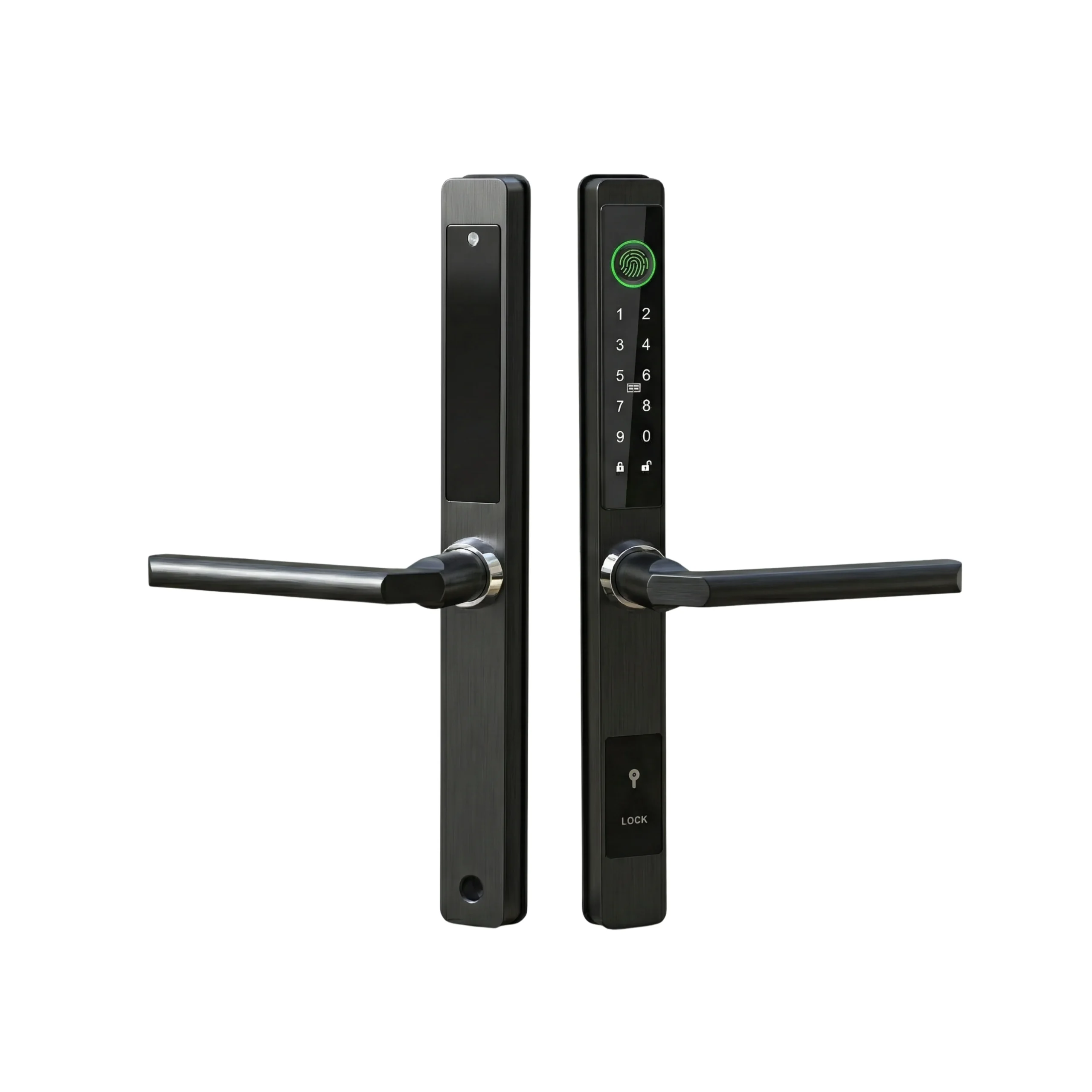

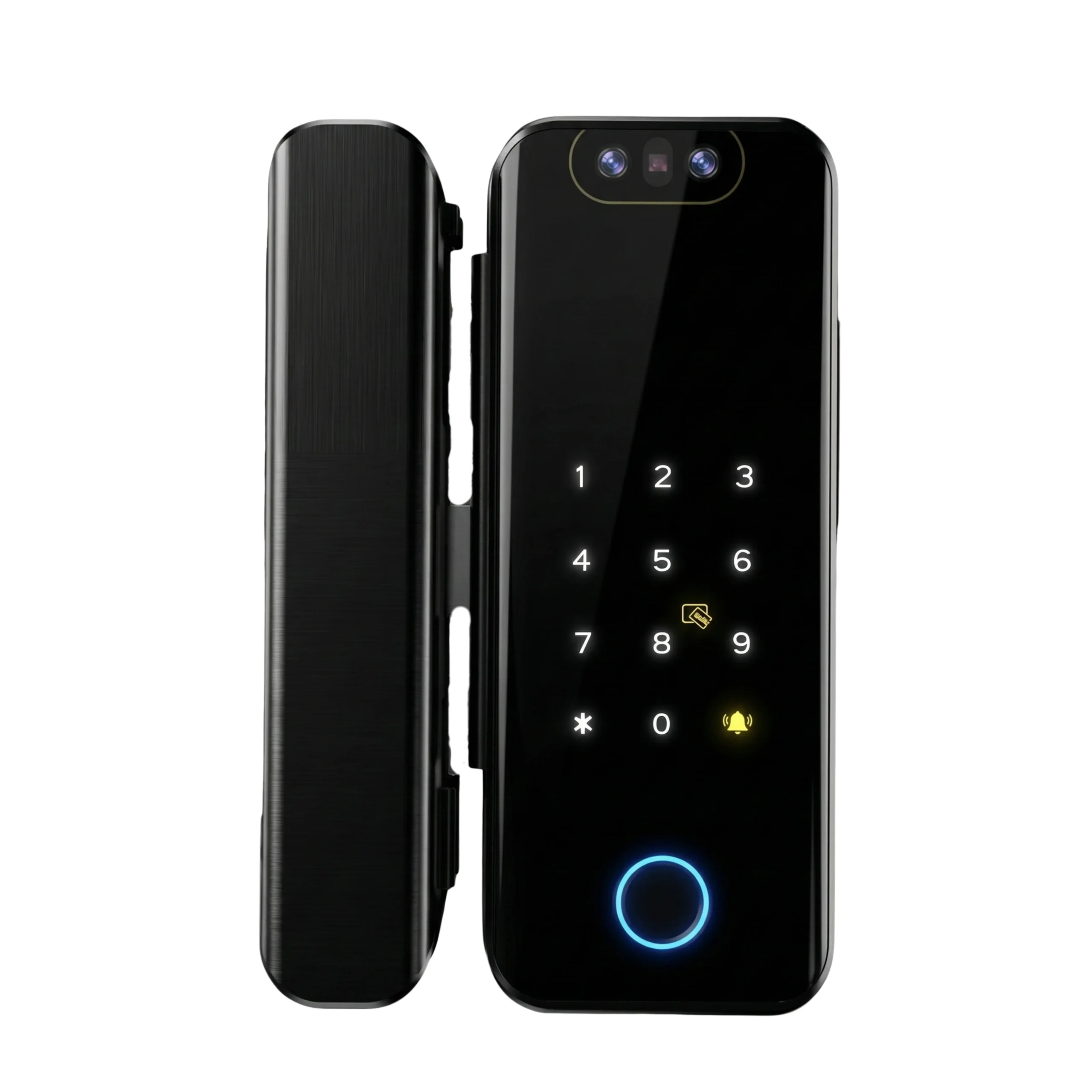
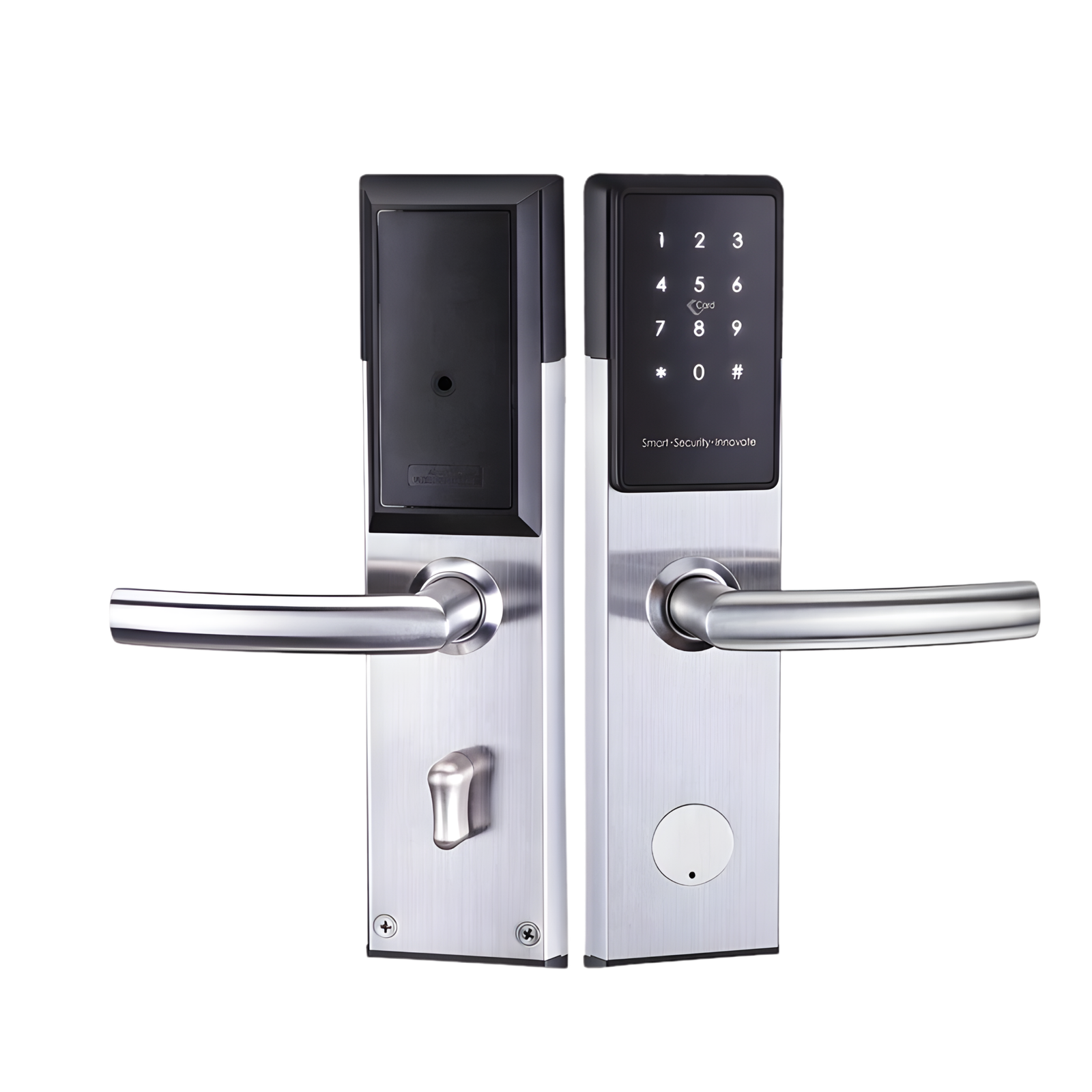
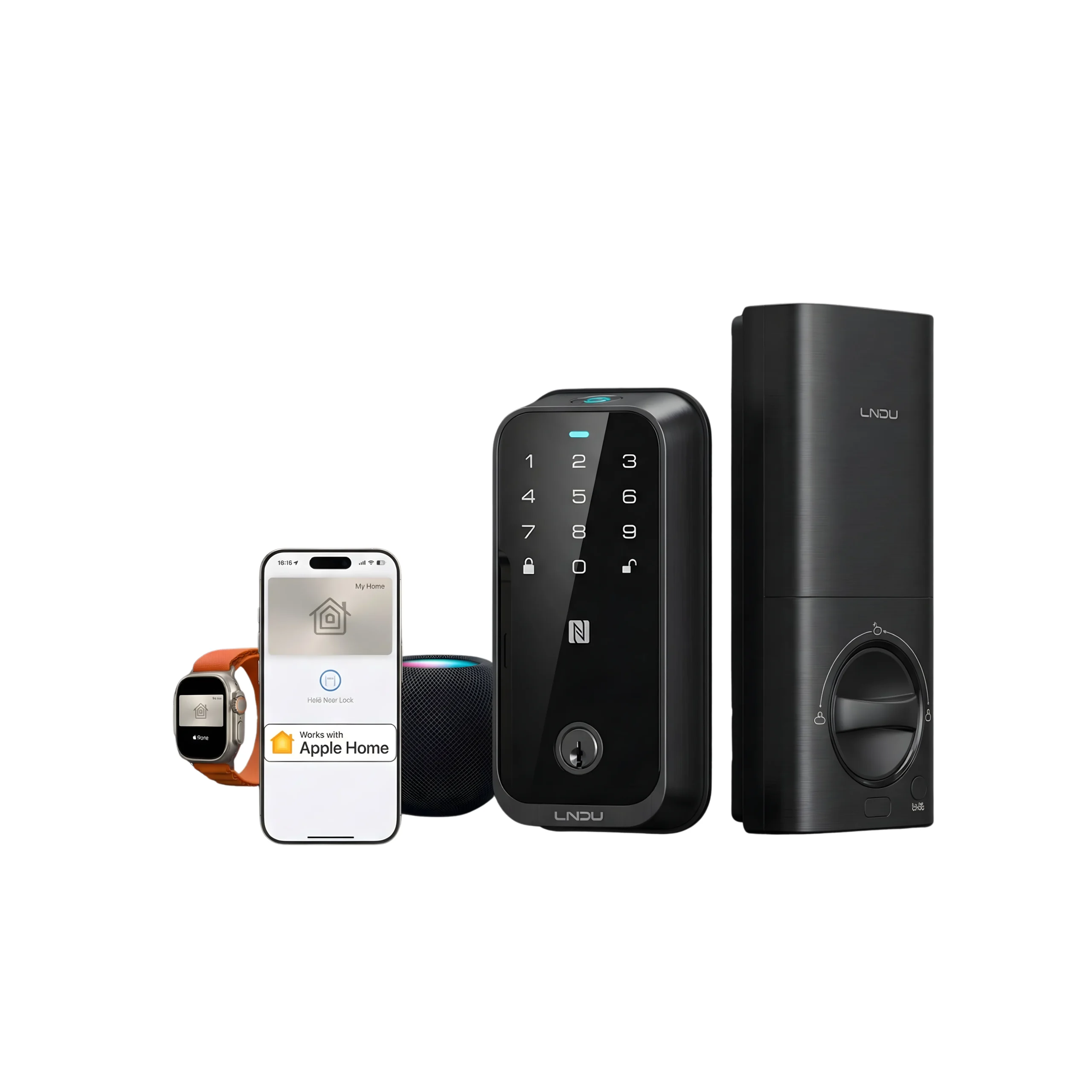









A PPD is a handheld unit that a technician carries from door to door to service electronic locks. It plugs into the lock, and depending on the system it can commission a new lock, push updated access rules, pull the audit trail, correct the clock, run diagnostics, update firmware, and in some systems open a door in an emergency. It exists because of one architectural fact: in an offline access control system the lock has no way to reach the outside world, so somebody has to physically walk to it. This article covers what those functions are, how hotel and facilities teams actually use them, and why the device has become less common.
Why the PPD exists at all
The PPD belongs to a generation of access control built around locks with no network connection. Each lock is a small standalone computer holding its own rules and its own event log.
That design has real advantages. It does not depend on Wi-Fi, it does not care if the building’s network goes down, and it is cheap per door across a large estate. What it cannot do is talk to anybody. So every task that needs information to move into or out of the lock needs a courier, and the PPD is that courier.
Some systems reduce the number of trips by moving data on the cards themselves. A staff card updated at a reader by the entrance carries the new cancellation list to every door that member of staff touches during their shift. Clever, and it works, but it only covers doors people actually visit. The PPD is what handles the rest.
The functions, one by one
Commissioning. A new lock out of the box knows nothing. It has to be told which door it is, which system it belongs to, and what its rules are. The PPD writes that identity during installation.
Pushing access rules. Access groups, schedules, and blacklists change. On an offline door, an updated rule set has to be carried there and written into the lock.
Collecting the audit trail. The lock records every opening, every rejected credential, and often every low-battery warning. Those records sit in the lock until something extracts them. The PPD downloads them for review.
Clock synchronisation. This is the maintenance job people underestimate. Lock clocks drift, by seconds a week that become minutes a year. On a system running time-based access, drift means a shift-restricted card starts failing near the edges of its window, and it means your audit timestamps do not line up with your CCTV. Regular clock sync is not optional on an offline estate.
Diagnostics. Battery voltage, motor operation, sensor status, error history. A technician doing a maintenance round can read the health of a lock without dismantling it.
Firmware updates. Occasional, but they exist, and offline locks have no other way to receive them.
Emergency opening. Some systems allow an authorised PPD to open a lock whose electronics have failed or whose battery is flat. This is the function that makes the device security-critical, and it is why custody of a PPD matters as much as custody of a master key.
How hotels and serviced apartments use it
In hospitality the PPD is usually a back-of-house engineering tool rather than a front-desk one, and the split is worth understanding.
The front desk works with cards. A guest checks in, the desk encodes a card, and the card carries its own permissions and expiry. Room moves, extensions and lost-card replacements are all handled by re-encoding rather than by touching the door. That is the whole point of a data-on-card system and it is why a busy property can run hundreds of rooms without an engineer.
Engineering picks up what cards cannot carry. A door that stops responding. A guest dispute where housekeeping and the guest disagree about who entered and when, which needs the door’s own log rather than the front-desk record. A room being brought back into service after a refurbishment. Clock drift across a floor. And battery service, which in a large property is a scheduled round rather than a reactive call.
There is also the lost-card problem. Cancelling a card in the system is instant. Making sure every door knows it is cancelled is not, on an offline estate, which is why the blacklist distribution question matters and why properties in this architecture care about how quickly a cancellation propagates.
How facilities and property management use it
Managed towers, mixed-use estates and community developments use the same tool for a different rhythm.
Maintenance rounds are the main one. A technician works a floor or a building with the device, pulling logs and syncing clocks as a scheduled task rather than in response to a fault. On a large Dubai estate this is genuinely a route-planning exercise, and how many doors a technician can cover in a shift becomes a real operating number.
Contractor and technician access is the second. In an offline system, giving a maintenance contractor time-boxed access to a plant room or a riser cupboard means writing that permission somewhere. Withdrawing it when the contract ends means writing it again.
Battery management is the third, and in the UAE it is harder than the datasheet suggests. Heat shortens battery life, and a door in a car park stairwell or on an unshaded external elevation will not match the consumption of a corridor door. Diagnostics let a facilities team replace on condition rather than on a fixed calendar, which across several hundred doors is the difference between a manageable routine and a running failure rate.
Audit is the fourth. Where a building has to produce a record of who accessed a restricted area, that record has to be collected before it can be produced. Commercial premises in Dubai falling under SIRA scope should confirm their access control and record-keeping obligations directly, since requirements vary by premises type.
Why the device is less common now
Connected systems removed the reason for the trip.
When a lock can reach a hub or gateway, the rules go to it over the air, the audit trail comes back on its own, the clock syncs continuously, and low-battery warnings arrive before the battery is flat. The functions did not disappear. The courier did.
What replaced each one is worth spelling out, because the underlying job still has to be done by something. Commissioning happens through an administrator’s phone at the door. Rule changes and cancellations are pushed from a server. Audit trails sync automatically where there is connectivity, and on demand from an admin phone where there is not. Clocks stay in step with the network. Diagnostics show in a dashboard. Emergency opening splits into two answers: a mechanical key override, and external power through a USB port when the batteries are flat.
That last point is worth being precise about, because it is the function people most associate with the PPD. On battery-powered locks in this category the standard emergency route is a mechanical key plus external USB power, not a handheld programmer.
Where a PPD still makes sense
Not every estate should be connected, and the honest cases are these. Very large offline deployments where fitting network infrastructure at every door is not proportionate. Sites with genuinely no connectivity, such as remote or industrial locations. Estates already standardised on an offline platform, where mixing architectures creates more operational complexity than it removes. And organisations whose security policy deliberately keeps access control off the network.
If you are in one of those, the questions worth asking are about custody and process rather than the device. Who holds it. Whether it is PIN protected. What happens when it is lost. How often rounds actually happen, because a maintenance schedule that exists on paper and not in practice is how audit trails end up six months stale.
Frequently asked questions
Is a PPD the same as a card encoder?
No. An encoder sits at a desk and writes cards. A PPD is portable and connects to the lock itself. A hotel typically has encoders at the front desk and, if it runs an offline system, a PPD in engineering.
Can a PPD open any lock?
Only locks in the system it is authorised for, and only where the system permits that function. It is not a universal tool, and it should be treated with the same control as a master key.
Do app-based smart locks need a PPD?
No. An administrator’s phone performs the commissioning, configuration and diagnostic functions over Bluetooth, and emergency access is handled by mechanical key and external USB power.
How often should offline locks be serviced?
It depends on traffic and environment rather than a fixed interval. Clock drift and battery consumption are the two drivers, and in UAE conditions heat exposure makes the difference between doors on the same site significant.
What happens to the audit trail if nobody collects it?
It stays in the lock until the memory fills, at which point older events are typically overwritten. This is why scheduled collection matters on an offline estate, and why an unvisited door can quietly lose its history.
Altix supplies and installs smart locks and access hardware for hotels, offices and managed properties across the UAE, and advises on how access and maintenance should be structured for the estate you actually have. Tell us about your site on WhatsApp.


