



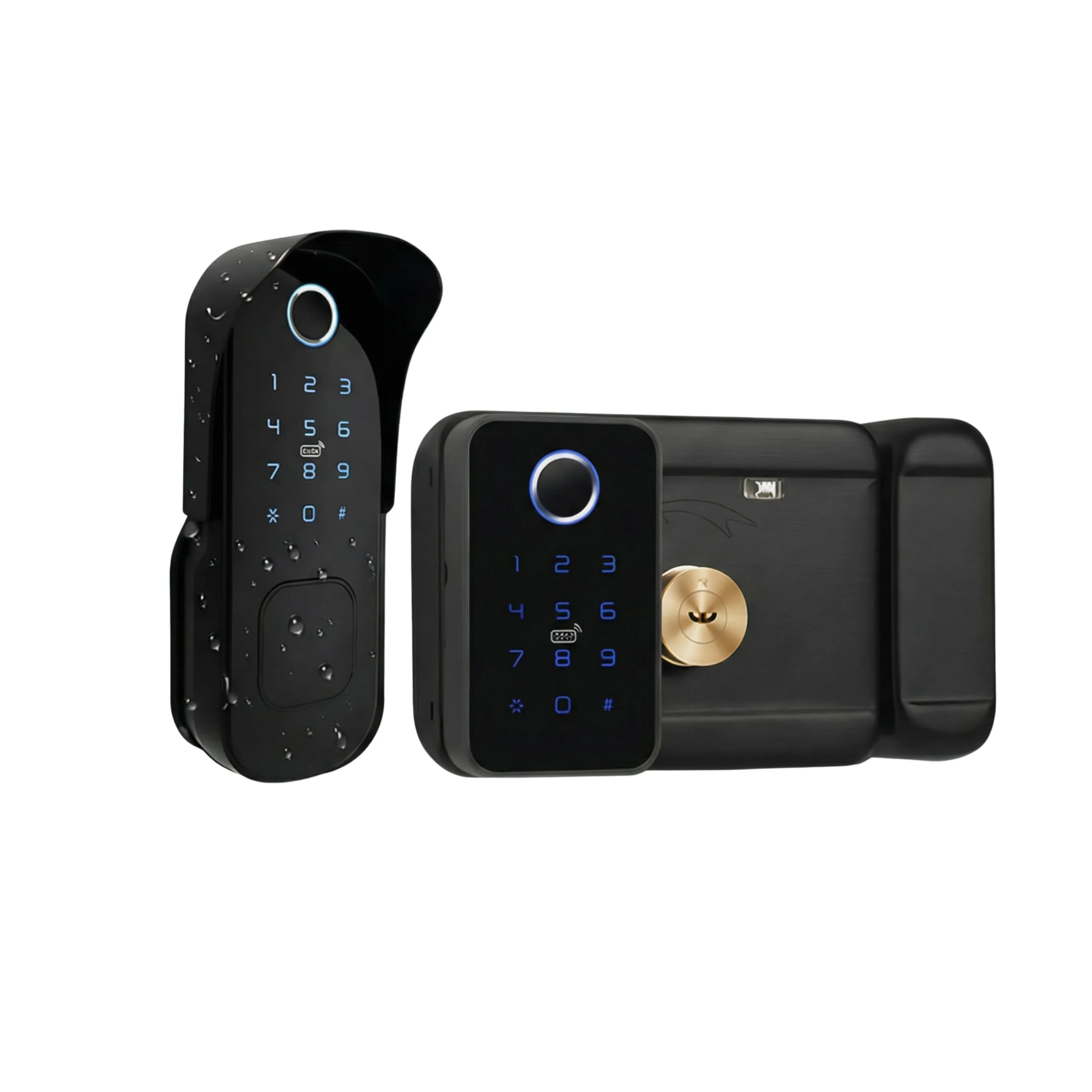
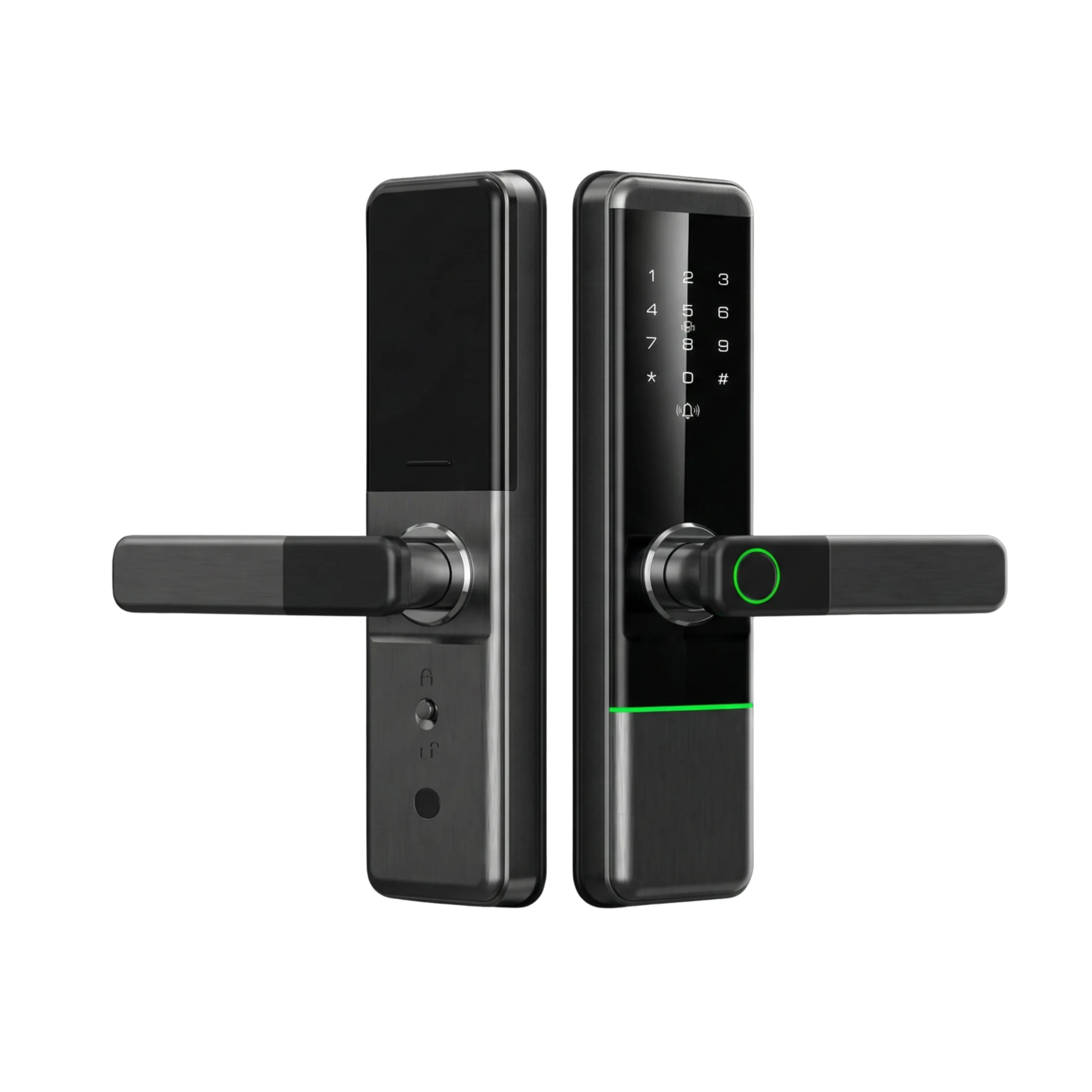









If your fingerprint lock keeps rejecting the same person, the sensor usually isn’t broken. The finger is. Ridge detail wears down with age, manual work, detergent, sanitiser and skin conditions, and a surface-reading sensor has nothing left to match against. Re-enrolling properly fixes maybe half of these cases for free. When it doesn’t, you switch that person to a card, a PIN or a vein reader, and you stop fighting it.
We get this call two or three times a month, and it’s almost always the same three people. An elderly parent who’s moved in. A live-in helper whose hands are in cleaning chemicals all day. Someone who works with their hands on site. The lock works fine for everyone else in the household, which is exactly why people assume it’s faulty when it isn’t.
Why does a fingerprint lock stop reading your finger?
A fingerprint sensor reads the ridges and valleys on the top layer of your skin. It needs contrast between them. Anything that flattens the ridges, fills the valleys, or changes the skin’s moisture level takes that contrast away.
| Cause | What it does to the finger | How it shows up at the door |
|---|---|---|
| Age | Ridge height drops and skin loses elasticity, so the print flattens under pressure | Works in the morning, fails in the evening, then fails most of the time |
| Manual and site work | Abrasion and cuts wear the pattern down, especially on thumbs and index fingers | Fails on the dominant hand, works on the other one |
| Cleaning chemicals and wet work | Repeated wetting and drying cracks the skin and causes dermatitis | Worked for a year, then stopped over a few weeks |
| Very dry skin | Not enough moisture for a capacitive sensor to read a difference | Fails after a long stretch in air conditioning, works after a shower |
| Wet or damp fingers | Water fills the valleys, so the sensor sees one flat surface | Fails after wudhu, washing up, or the pool |
| Hand cream, oil, sunscreen | Fills the ridge detail and leaves residue on the glass | Fails for everyone for a few days, then clears |
| Henna | Sits on and stains the skin surface | Fails for a week or two after Eid and weddings, then comes back |
Two of those rows have real numbers behind them.
A Malaysian hospital study of 100 patients with hand dermatitis found 27 percent of them failed fingerprint verification, against 2 percent of matched controls. Fingerprint dystrophy showed up in 42 percent of patients against 2 percent of controls. That was a verification scanner in a clinic, not a door lock, so read it as a direction rather than a rate you’ll see on your own door, but the direction is steep.
On the trade side, a construction industry study reported hand skin symptoms in 25.4 percent of construction workers against 14.6 percent of office staff. It wasn’t UAE data, and we’d expect the gap here to be wider rather than narrower given the heat and the glove hours.
Henna is the one nobody warns you about. A forensic study out of India took 2,700 prints from 30 people on a SecuGen scanner and found that oils, lotions, sanitisers and mehendi all degrade the captured print. If half your household’s prints stop working the week after a wedding, that’s why.
How do you tell a sensor problem from a finger problem?
Five minutes, no tools.
Have three different people try the same finger position on the lock. If everyone fails, it’s the lock or the glass. If only one person fails, it’s their finger.
Then have the person who fails try a different finger, ideally a middle finger on the other hand. Middle fingers on the non-dominant hand are usually the least worn on the whole body. If that one reads first time, the original finger is worn and nothing you do in the app will fix it.
Last, wipe the sensor with a dry microfibre cloth and try again. Sunscreen and hand cream build a film on the glass that looks exactly like a hardware fault.
If all three people fail on all fingers and the glass is clean, then you have a lock problem, and that’s a warranty conversation rather than this article. Our smart lock warranty guide covers what’s actually covered.
What to try first, before you spend anything
Most locks let you enrol the same finger more than once. Almost nobody does it.
Delete the failing finger from the lock, then enrol it three times as three separate entries. Vary the angle each time, slightly left, straight on, slightly right. You’re giving the lock three reference images instead of one, and it only needs to match one of them. On a worn finger this alone takes the hit rate from frustrating to usable more often than not.
Enrol two more fingers for that person while you’re there. Middle and ring fingers on both hands. A lock that holds 50 or 100 fingerprints has plenty of room, and there’s no security cost to it.
Then change the habit. A worn finger reads better with slight pressure and a two-second hold than with a quick tap. Tell the person to rest the finger and count to two.
If the hands are dry, a small amount of hand cream twenty minutes before, not immediately before, sometimes brings a print back. Immediately before makes it worse.
Do all of that first. It costs nothing, and it’s what we’d try on a service call before recommending anything.
Which unlock method works when the fingerprint won’t?
If re-enrolment fails, the honest answer is that you stop using that person’s fingerprint and give them something else. You don’t need to replace the lock to do it.
| Method | Cost | Works for worn or damaged hands | Practical catch in a UAE home |
|---|---|---|---|
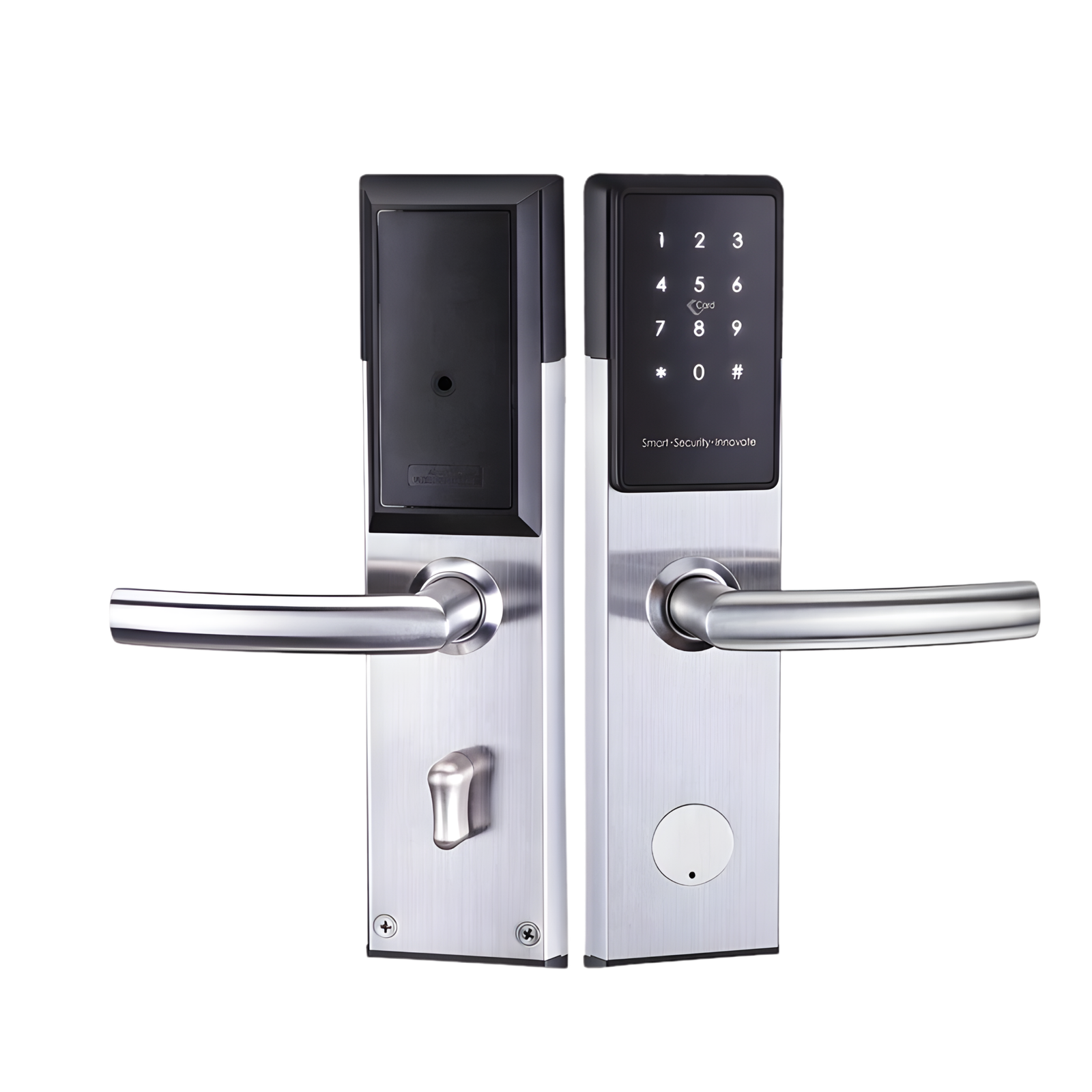
| PIN code | Free, already on the lock | Yes | Elderly users forget it, and it gets shared with the whole building |
| RFID card or fob | AED 34.99 for 5 cards, AED 89.99 for a fob | Yes | Gets left in the other handbag, needs a spare |
| Bluetooth app unlock | Free, needs a smartphone | Yes | Bad fit for a parent who doesn’t use apps |
| Mechanical key | Included | Yes | Defeats the point, but keep one off-site regardless |
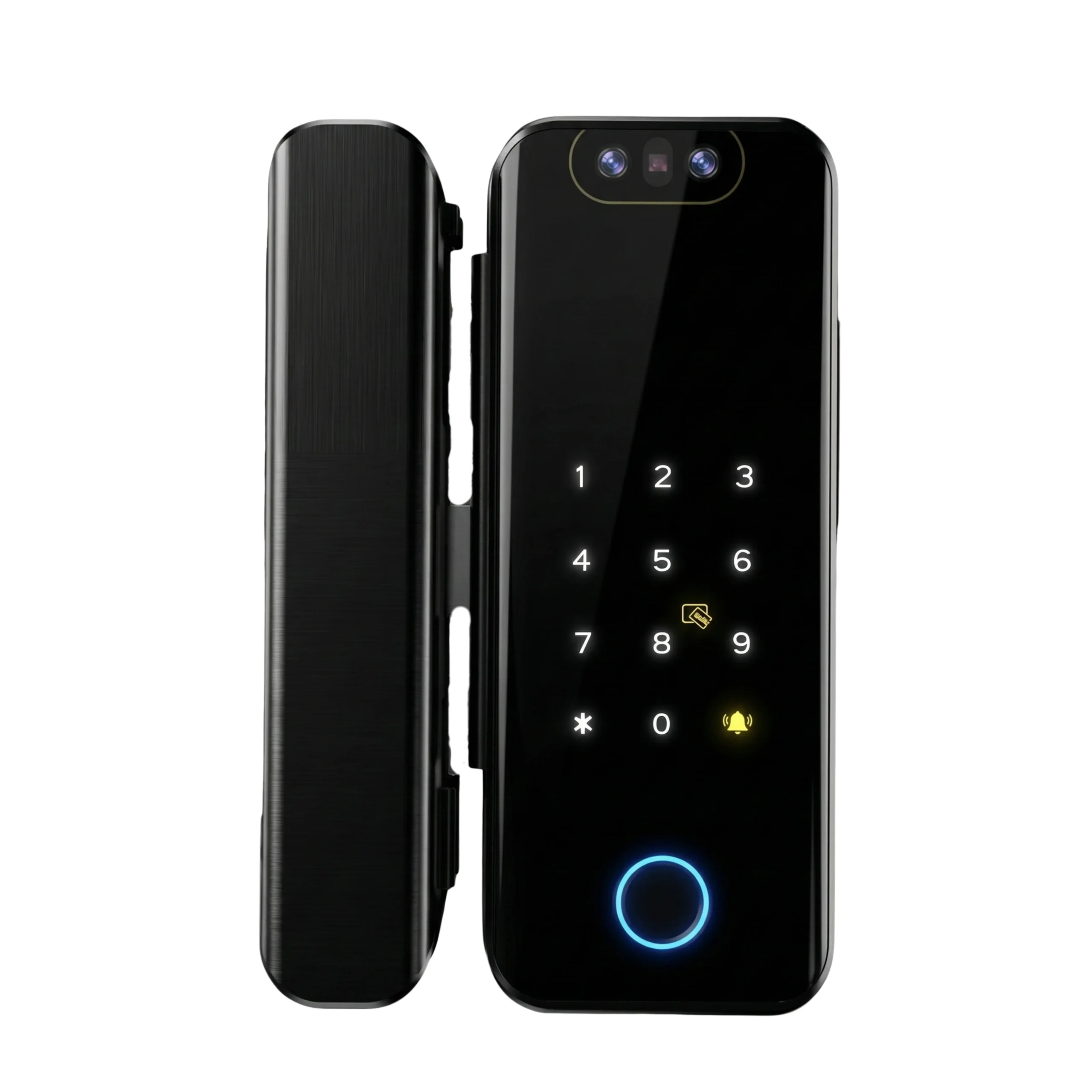
| Face recognition | AED 2,000 and up on a new lock | Yes | Needs the person to face the door squarely, and abayas or niqabs change enrolment |
| Finger vein | AED 1,599.99 and up on a new lock | Yes, reads under the skin | New lock, not an add-on |
| Palm vein | AED 1,719.99 and up on a new lock | Yes, no contact needed | New lock, and the palm has to be presented at roughly the right distance |
For most households the answer is the AED 34.99 card set. We’d rather tell you that than sell you a AED 1,700 lock you don’t need. You get five cards in the pack. Enrol two, one for the person’s bag and one for the kitchen drawer, and the problem is closed for the price of a coffee.
The card answer breaks down in two situations. The first is when the person keeps losing the card, which with some elderly users is every week. The second is a shared or rented property where you don’t want another credential circulating. In both of those, the credential has to be attached to the person, and that’s when vein recognition earns its price.
What is finger vein and palm vein recognition, and how is it different?
A fingerprint sensor reads the surface. A vein sensor shines near-infrared light into the finger or palm and reads the pattern of blood vessels underneath it. Haemoglobin absorbs that wavelength, so the veins come back as dark lines against lighter tissue.
Surface damage stops mattering, which is the whole reason this technology is in the article. Cuts, calluses, dry skin, henna and detergent all sit above the vein layer, so a hand that a fingerprint sensor has given up on still reads.
You also can’t leave a vein pattern behind on a door handle. Fingerprints get left on every surface you touch, veins don’t, so the copying attack that gets demonstrated on cheap fingerprint locks doesn’t apply the same way. And the pattern needs living tissue with blood moving through it, which is the property manufacturers lean on hardest in their marketing. It’s real. Treat “impossible to copy” as a sales line anyway, rather than a tested result.
The same caveat we put in our biometric comparison applies here. Lockin publishes 0.17 seconds and 99.9 percent accuracy for its Venokey palm reader, and describes over 50,000 vein data points. Those are Lockin’s figures. We haven’t found independent lab testing that confirms them, and we haven’t run our own. The mechanism is sound and our customers with difficult hands report it works, but the specific numbers belong to the manufacturer.
Which vein locks can you buy in the UAE, and what do they cost?
All six were in stock at altix.ae on the day we wrote this. Prices include VAT.
| Model | Biometric | Price (AED) | Other unlock methods | Where it fits |
|---|---|---|---|---|
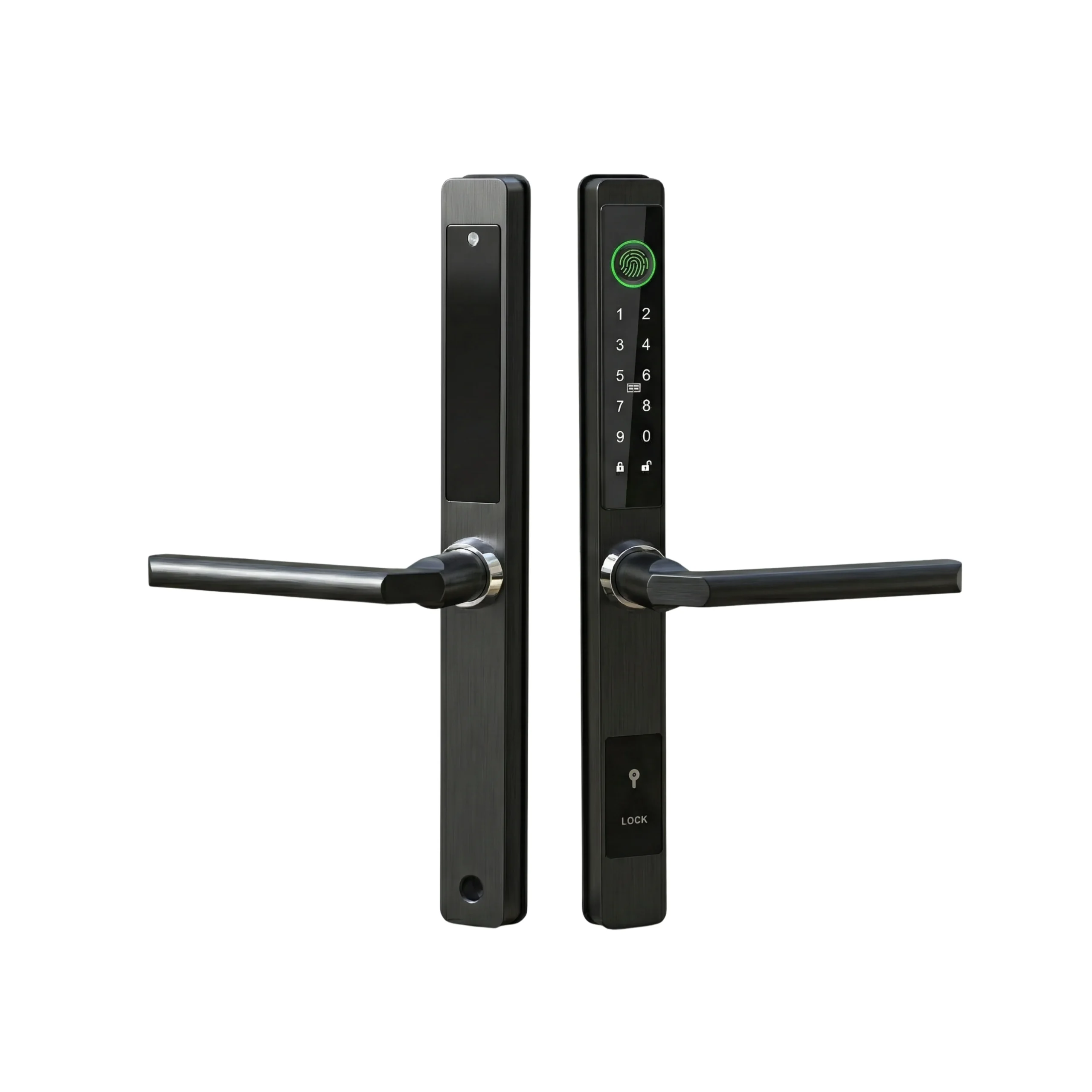
| Lockin SV40 | Finger vein | 1,599.99 | PIN, Bluetooth, NFC card, temporary code, key | The elderly-parent answer. Emergency knob unlock and indoor double-induction unlocking |
| Lockin S5 | 3D finger vein | 1,649.99 | PIN, NFC card, temporary code, key, app | Main door, dual battery 5000mAh plus 2250mAh, C-class cylinder |
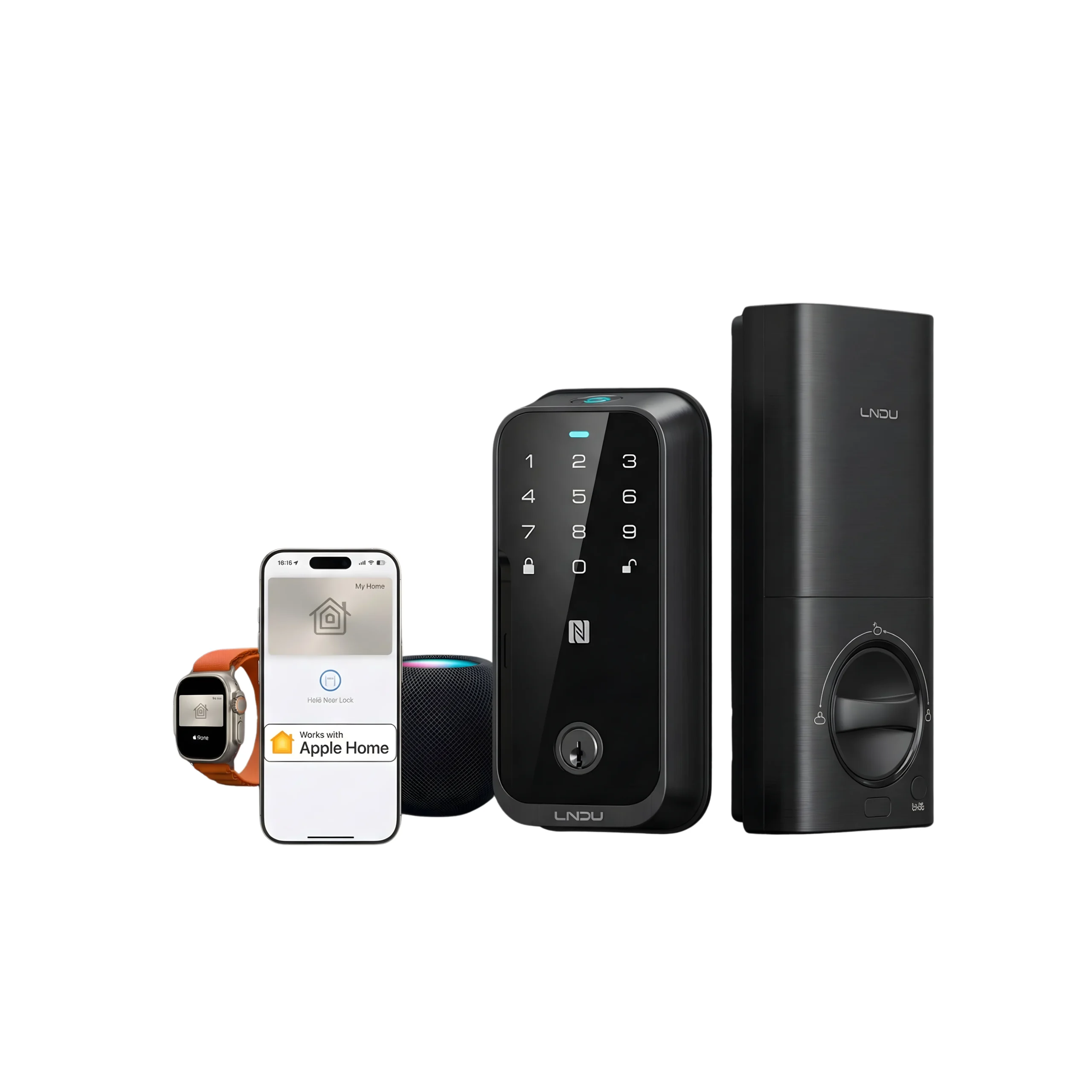
| Lockin Veno Plus | Palm vein | 1,719.99 | Fingerprint, PIN, key, app, Alexa, Google, Apple Home | Touchless. Adds a 2K 180 degree camera and 8GB local storage |
| Lockin S6 Max | Finger vein plus 3D face | 1,999.99 | Fingerprint, PIN, card, key, Bluetooth, temporary code | Households that want two biometrics on one door |
| Altix Prime | Palm vein plus 3D face | 2,299.99 | Fingerprint, PIN, card, app, TTLock | Our own brand, TTLock ecosystem, so it shares an app with the rest of a fitted-out property |
| Lockin V5 Max | Palm vein plus 3D face | 2,659.99 | Fingerprint, PIN, card, key, app | Top of the range |
Before you order, three things that come back to us often enough to put in writing.
The SV40 runs on the Mijia app and needs a Bluetooth gateway for remote access. That’s a different ecosystem from the TTLock and Tuya locks most UAE homes already have, so you’d be running a second app. We also can’t confirm which regional server a Mijia account lands on from the UAE. Ask us to check against your specific unit before you buy, rather than finding out after.
Neither the SV40 nor the S5 publishes an IP rating or an operating temperature range. The Veno Plus publishes IP53 and BHMA Grade 3, and quotes a low-temperature limit of minus 30 Celsius, which is useless information in this country. What matters here is the upper limit and it isn’t published. Keep all of these off a west-facing exposed door until the supplier gives us a number. Our coastal and heat write-up explains why that gap matters.
Biometric templates count as sensitive personal data under Federal Decree-Law No. 45 of 2021. These locks store templates on the device rather than in a cloud, and that’s what we’d want for a home. Get it in writing from whoever sells you one, including us.
A worked example: setting up an elderly parent in a Dubai Marina apartment
Your mother is 74 and has moved in with you. She’s failed the fingerprint reader on the main door about eight times in two weeks. This is how the fix runs from a Saturday morning.
- 09:00. Three of you test the same lock with the same finger position. You and your husband read first time. She fails four out of five. Finger problem, not lock problem.
- 09:10. She tries her left middle finger. Two out of five. Better, still not usable.
- 09:15. You wipe the sensor and re-enrol her right thumb three times, varying the angle. Then her left middle finger twice. Five slots used out of the lock’s capacity.
- 09:30. Re-test over ten attempts. Six pass. Enough to be annoying, not enough to trust when she’s carrying shopping.
- 09:45. You issue her a PIN as an interim. She writes it on a card in her handbag, which is exactly the outcome you were trying to avoid, and confirms the PIN route is wrong for her.
- 10:00. You order an RFID card set at AED 34.99 and message us on WhatsApp to confirm the cards match her lock’s card frequency. They do.
- Tuesday. Cards arrive. You enrol two, one for her bag, one taped inside the shoe cabinet. She’s now getting in every time.
- Week three. She’s left the card in a different bag twice and rung the doorbell at 21:00 both times. The card works, the habit doesn’t.
- Week four. You decide the credential has to be attached to her. You send us a photo of the door edge and the existing lock body so we can confirm the mortise size before quoting.
- Week five. SV40 fitted, AED 1,599.99 plus fitting. Her right hand enrols in under a minute on the vein reader. Your prints and your husband’s go on as well.
- Week six. Zero failures logged for her. Her old cards stay enrolled as the backup, and the mechanical key goes to your sister in Al Barsha rather than staying in the apartment.
Total elapsed time about six weeks, and the AED 34.99 step wasn’t wasted. It’s what told you the problem was the credential, not the reader.
What does it cost?
| Line | AED | Note |
|---|---|---|
| Re-enrolment and habit change | 0 | Do this first, always |
| RFID card set, 5 cards | 34.99 | Fixes most cases outright |
| Bluetooth key fob | 89.99 | For someone who won’t carry a card but will carry keys |
| Finger vein lock, entry | 1,599.99 | Lockin SV40 |
| Palm vein lock, entry | 1,719.99 | Lockin Veno Plus |
| Fitting, Dubai and Sharjah | 450 | Our listed installation SKU |
| Fitting, Abu Dhabi | 550 | Our listed installation SKU |
| Gateway for remote access | 179.99 | Only if the lock needs one, and the SV40 uses a different one |
Our own numbers disagree with each other in one place, so here it is rather than buried. Our installation cost article quotes labour at AED 150 to 350, while our listed fitting SKU sells at AED 450. The lower band is a straight mortise-match swap where the new lock drops into the existing cut-out. The listed SKU covers the jobs where it doesn’t. Send us a photo of your door edge and we’ll tell you which one you’re in before you pay anything.
When you should not buy a vein lock
We’d rather lose the sale than have it come back.
Skip it entirely if a card set fixes the problem. AED 34.99 against AED 1,599.99 is not a close call, and most households never need to go further than the cards.
Skip it if one finger is failing and the other nine read fine. Re-enrol and move on with your day.
A west-facing exposed villa door or a pool gate is the wrong place for any of these until the supplier publishes an upper operating temperature. We won’t guess at that number on your behalf.
For a rented apartment you’ll leave in eighteen months, read our renter’s guide first and be clear on reinstatement before you spend AED 1,600 on a door that isn’t yours.
The SV40 in particular is the wrong buy if you’re already running TTLock or Tuya across the property and you don’t want a second app on the phone. Look at the Altix Prime instead, which sits on TTLock.
Whichever you pick, don’t treat the vein reader as the only way in. Enrol a card as well and keep the mechanical key somewhere off-site. Every biometric fails eventually, including this one.
Buy the lock that reads a difficult hand
-


How can Altix help?
Send us a photo of the door edge and the inside face of your current lock on WhatsApp and we’ll tell you three things: whether your existing lock takes a card, which vein models fit that door cut-out, and whether the fitting is a AED 150 job or a AED 450 one. That read costs nothing.
If the answer is a card set, we’ll tell you that and sell you the cards. If your parent’s hand needs a vein reader, we’ll confirm the ecosystem question before you commit rather than after.
FAQ
Why does my fingerprint lock work for everyone except one person?
Because the sensor reads surface ridge detail, and that person’s ridges are worn, cracked or too dry to give the sensor contrast. Age, manual work, cleaning chemicals and skin conditions all do it. The lock is behaving correctly.
Can I fix a worn fingerprint without buying anything?
Often, yes. Delete the finger and enrol it three times at slightly different angles, add two more fingers from the other hand, and press with light steady pressure for two seconds instead of tapping. That’s free and it’s what we try first.
Does henna affect fingerprint locks?
It can, for the week or two while it’s on the skin. A forensic study using a SecuGen scanner found mehendi, along with oils, lotions and sanitisers, degrades the captured print. Keep a card enrolled through Eid and wedding season.
Are vein locks better for elderly parents than face recognition?
Usually yes, for a practical reason rather than a technical one. Face recognition needs the person to stand square to the door at the right height, which is awkward with a walking frame or shopping. A finger or palm presented at waist height is easier. The Lockin SV40 also has an emergency knob unlock, which matters for someone who panics at a beeping door.
Do vein locks work with wet hands?
The reader looks under the skin, so surface water matters far less than it does to a fingerprint sensor. Lockin states its palm reader works with wet, dry and aged hands. That’s Lockin’s claim and we haven’t independently tested it, but it matches what our customers report after wudhu and after the pool.
Where is my vein data stored?
On the lock itself for the models we sell, not in a cloud. Biometric data is classed as sensitive personal data under Federal Decree-Law No. 45 of 2021, so get the storage location in writing from whoever sells you the lock, including us.
Can I add a vein reader to my existing lock?
No. Vein recognition needs the infrared sensor built into the lock body, so it means a new lock. If you want to keep your current lock, the upgrade path is a card, a fob or a PIN.
What if the vein reader fails too?
Every biometric fails eventually, usually on a dead battery rather than a bad read. Every lock in the table above keeps a PIN, a card and a mechanical key as backups. Enrol at least two of the three and keep the key with someone outside the property.
Popular Post
View All Installation & DIY
Lockin App Won’t Connect to Wi-Fi? It’s Almost Always the 2.4GHz Problem
Smart locks only speak 2.4GHz, and UAE ISP routers hide that band behind one combined network name. Why…
Read More Info → Security & Safety
Are Smart Locks Secure? Myths vs. Reality (Expert Breakdown)
Are smart locks secure for real homes and properties in Dubai and Abu Dhabi?For most households, rentals, and…
Read More Info → Apartments & Villas
How to control Smart Locks with Alexa, Google Home
Smart locks aren’t just about replacing keys, they’re about convenience. One of the biggest advantages of choosing the…
Read More Info → How-to
Tuya vs TTLock – Which App is best?
Tuya vs. TTLock: Which Smart Lock Platform Should You Choose for Your Home? Smart locks are becoming more…
Read More Info →
Smart Locks in UAE: The 2026 Buyer’s Guide You Actually Need
If you’re upgrading security in your home, villa, or office in the UAE, the smartest move in 2026…
Read More Info → Wi-Fi, Remote & Smart Home
Bluetooth vs Wi-Fi Locks – Which One Fits Your Space?
Should your smart lock work only when you are standing at the door, or should it let you…
Read More Info →