













On a beachfront villa the door material decides the lock, and it also decides what breaks first. Aluminium doors fail at the holes you drill in them. Timber doors fail at the latch, because the leaf swells in the humidity. Glass doors fail at the patch fitting, and steel gates fail along the weld line. Same salt air, four completely different problems.
Most buying guides stop at whether the lock fits. Fit is the easy part, and we’ve covered it separately in our guide to the right lock for every UAE door type. This one is about what survives eighteen months on the Palm, in Al Marjan, on Saadiyat or facing the water in JBR. We’ve also written about why an IP66 rating tells you nothing about salt, which covers the lock’s own metal. Here we’re looking at the door underneath it.
Which door materials are on UAE beachfront villas?
Four, plus a fifth that shows up on gates.
Aluminium dominates. It’s the standard specification for villa entrances and glazed openings across Palm Jumeirah, Bluewaters, Saadiyat and the Marjan waterfront, because it doesn’t rust the way steel does and the frames can be thin enough to carry big glass. Nearly always powder coated, occasionally anodised.
Timber main doors still appear on older Jumeirah properties, on villas built before the aluminium pivot look took over, and as a design choice where somebody wanted a solid teak or engineered hardwood entrance. Usually with a mortise lock body.
Frameless or semi-framed glass turns up on pool gates, garden doors and the beach-side terrace door. The lock hardware sits in a patch fitting bonded to the glass, not in the glass itself.
Steel appears as a fire-rated door on the service entrance and as the villa gate. And uPVC shows up occasionally on secondary doors and utility rooms, where the frame is plastic with a steel reinforcing insert running through it.
Which lock type fits each door material, and what fails on the coast?
| Door material | Lock format that fits | What fails first near the sea | What to spec |
|---|---|---|---|
| Powder-coated aluminium, 6068 or 2585 prep | Mortise or slim European body | Filiform corrosion creeping out from the holes you drilled | Seal every cut edge, 316 fixings, isolating washers |
| Anodised aluminium | Same | Slower than powder coat if the anodising is thick | Confirm anodising thickness before you cut it |
| Solid or engineered timber | Mortise body, or surface-mounted rim | Latch misalignment as the leaf swells, then motor strain | Bigger strike clearance, sealed edges, motorised bolt rather than latch |
| Frameless glass, 10 to 12 mm | Patch-fitting lock or glass door lock | The patch fitting and its screws, never the glass | 316 patch hardware, no galvanic contact |
| Steel fire-rated | Mortise, euro cylinder retrofit | Weld seams and the cut you make for the lock | Touch up every cut with primer, cylinder retrofit where possible |
| uPVC with steel reinforcement | Euro cylinder retrofit only | The internal steel insert, silently, from inside | Cylinder swap. Don’t drill new holes |
Look at the third column. On three of those six door types the failure starts at a hole the installer made, and that’s the line item nobody puts on a quotation.
What happens when you drill a powder-coated aluminium door on the coast?
You create the exact condition filiform corrosion needs.
Filiform corrosion is the thread-like creep you see under paint on aluminium. It starts at uncoated areas, meaning cut edges, mitred corners, drainage holes, scratches and drilled holes, rather than in the middle of a coated panel. Once it starts it runs sideways under the coating and lifts it as it goes. You’ll see fine worm tracks radiating out from a screw hole long before you see anything you’d call rust.
The conditions that drive it are salt, temperatures around 30 to 40°C, and relative humidity between 60 and 90%. That’s a description of a Dubai coastal summer. Overnight humidity on the frontage sits above 80% for most of the year, and the door surface runs well over 30°C from March to November.
So the sequence goes like this. Your aluminium door left the factory fully coated and sealed. An installer cuts a mortise pocket, drills two through-bolt holes and a spindle hole, and every one of those cuts exposes bare aluminium inside the door. Nobody seals them, because on an inland door it makes no difference at all. On the frontage it makes a difference within a year.
Qualicoat, the standard most architectural powder coating in the region is applied to, has a specific answer to this. Their Seaside class applies within 5 kilometres of a coast or tidal estuary and requires a deeper pre-treatment etch, at least 2.0 g/m² of aluminium removed versus 1.0 g/m² for the standard class, plus a separate filiform corrosion test on a sample. If your villa door was specified properly, it was coated to Seaside class. Then somebody drilled through it, and the hole has no class at all.
Four things fix it, and all four happen at install.
- Seal every cut edge and drilled hole. An etch primer or a marine-grade sealant goes on the bare aluminium inside the cut, before the lock does.
- Use 316 stainless through-bolts and screws rather than whatever came in the box.
- Fit nylon isolating washers wherever a stainless fixing touches the aluminium. Stainless against aluminium in a salt film sets up a galvanic couple, and it’s the door that corrodes, not the screw.
- Don’t over-torque anything. A crushed coating edge around a hole becomes the next start point.
This is five minutes and under AED 100 of parts. Skipped, it’s a door leaf replacement, and a coastal villa entrance door is not a small number.
Why do timber doors fail differently?
Timber doesn’t corrode. It moves, and the lock is what notices.
Wood settles at an equilibrium moisture content set by the humidity around it. The working rule among joiners is that a 4% change in moisture content produces roughly a 1% change in dimension across the grain. A door that arrived at 8% moisture content and now lives at 85% humidity is heading toward the high teens, which on a wide leaf means several millimetres of growth across the width.
Solid timber moves the most. Engineered cores and veneered flush doors move considerably less, which is why most modern UAE villa doors handle it. But the direction is the same, and it’s seasonal, so the door that closes cleanly in February binds in August.
A smart lock feels that in four stages.
- The latch or bolt stops lining up with the strike plate.
- A motorised lock keeps driving the bolt into the edge of the strike. It has no way of knowing it’s jammed, so it just draws current.
- Battery life collapses. Eight months becomes ten weeks.
- The motor or gearbox gives up, and that’s normally excluded from warranty as a fitting issue rather than a defect.
Preparation fixes this, not the lock. Seal all six faces of a timber door, including the top and bottom edges, which is where most doors drink. Give the strike plate a little more clearance than the manual suggests on a coastal door. On a wide or heavy timber leaf, choose a lock with a motorised deadbolt over one relying on a spring latch, because a bolt tolerates misalignment better than a latch does.
What about glass doors and pool gates?
On a glass door the glass is fine. It’s chemically inert, salt does nothing to it, and it’ll outlast everything else on the villa. The failure is always in the patch fitting.
A patch fitting is the metal shoe clamped top and bottom onto the glass, and on a locking leaf it carries the lock body. The industry default is 304 stainless. In a coastal position 304 pits under a static chloride film, particularly in crevices, and the crevice between a patch fitting and the glass gasket is about as static as it gets. 316, which contains molybdenum, holds up far better on the frontage.
Two more things go wrong on glass regularly enough to be worth naming.
The pool gate is usually the most exposed door on the property, and it gets the cheapest hardware. It faces open water, it takes chlorinated splash on top of salt aerosol, and nobody thinks of it as a security door. On most beach villas we look at, the main entrance has better hardware than the gate a child can reach.
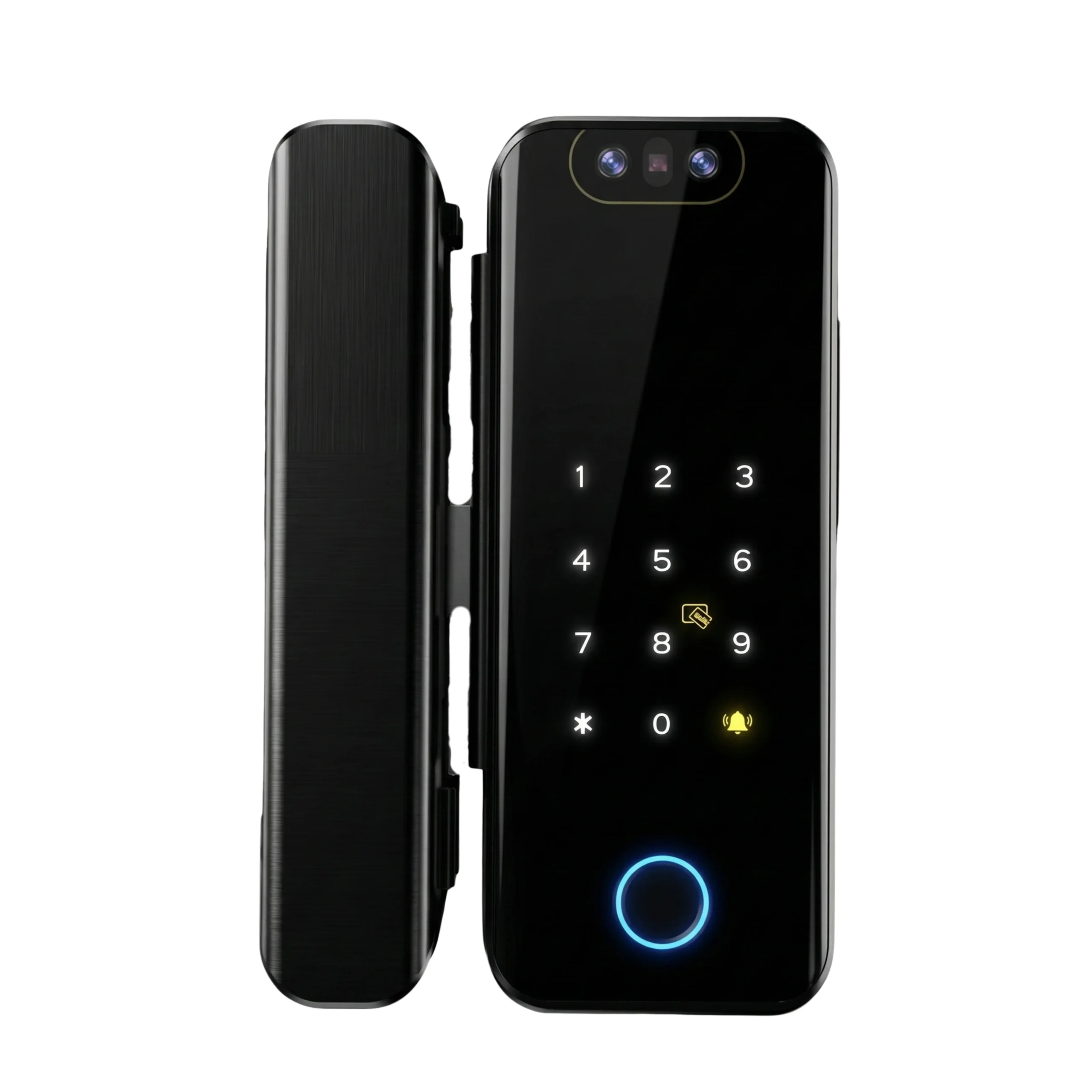
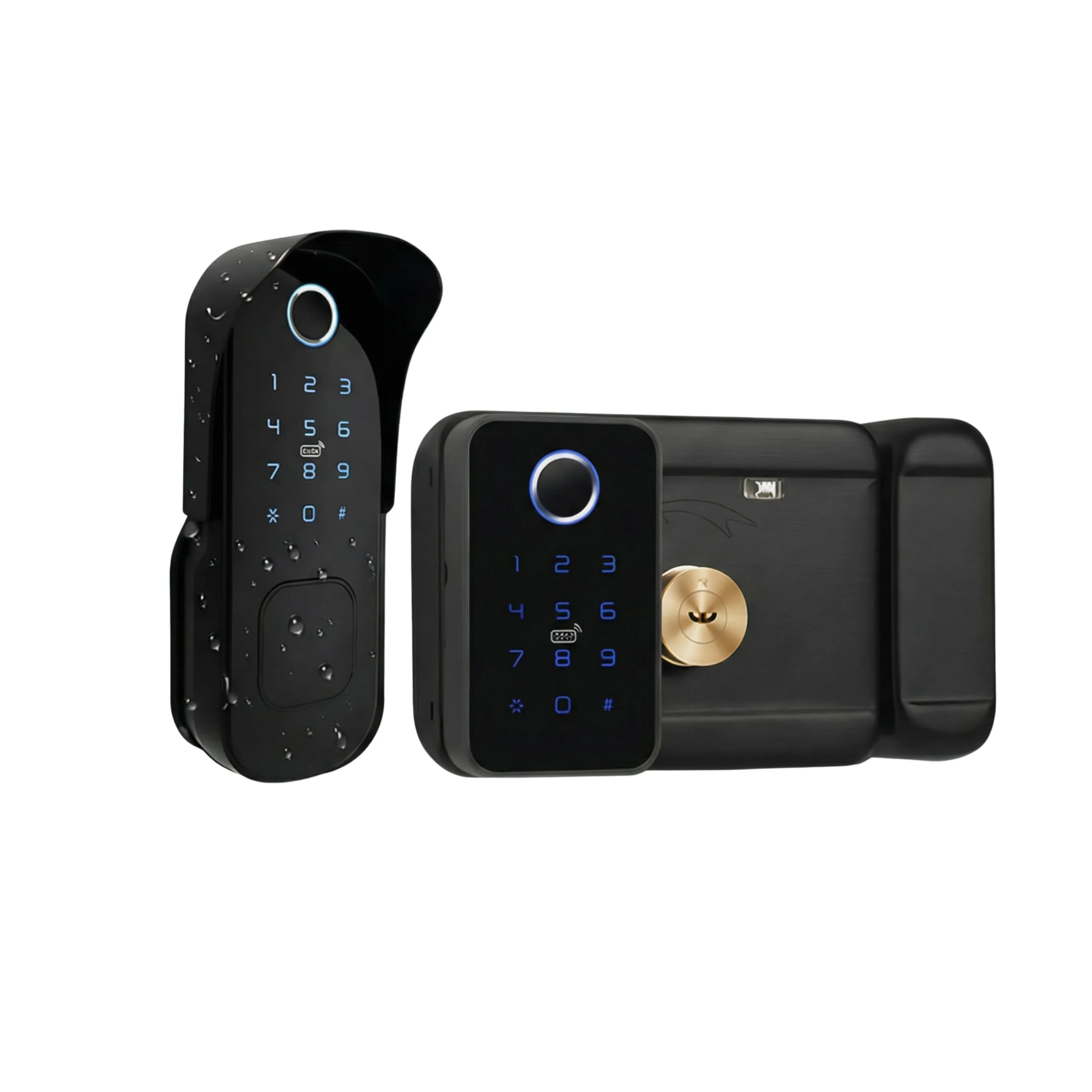
Sliding glass doors need a different lock entirely. A mortise lock designed for a swing door won’t work on a slider, and this catches people out after they’ve already bought. If your terrace door slides, you want a lock built for that, like the Altix GX Pro at AED 664.99, which is designed for office and sliding glass doors and runs face recognition, fingerprint, card, passcode and key.
Do steel and fire-rated doors near the sea need anything different?
Yes, and it’s the same principle as aluminium: protect the cut.
A fire-rated steel door is galvanised and painted as a complete assembly. Cutting into it for a lock exposes bare steel at the edge of the cut, and bare steel in a chloride film rusts far more willingly than aluminium does. Weld seams and factory cut lines are the other weak points, since they’re where the galvanising is thinnest.
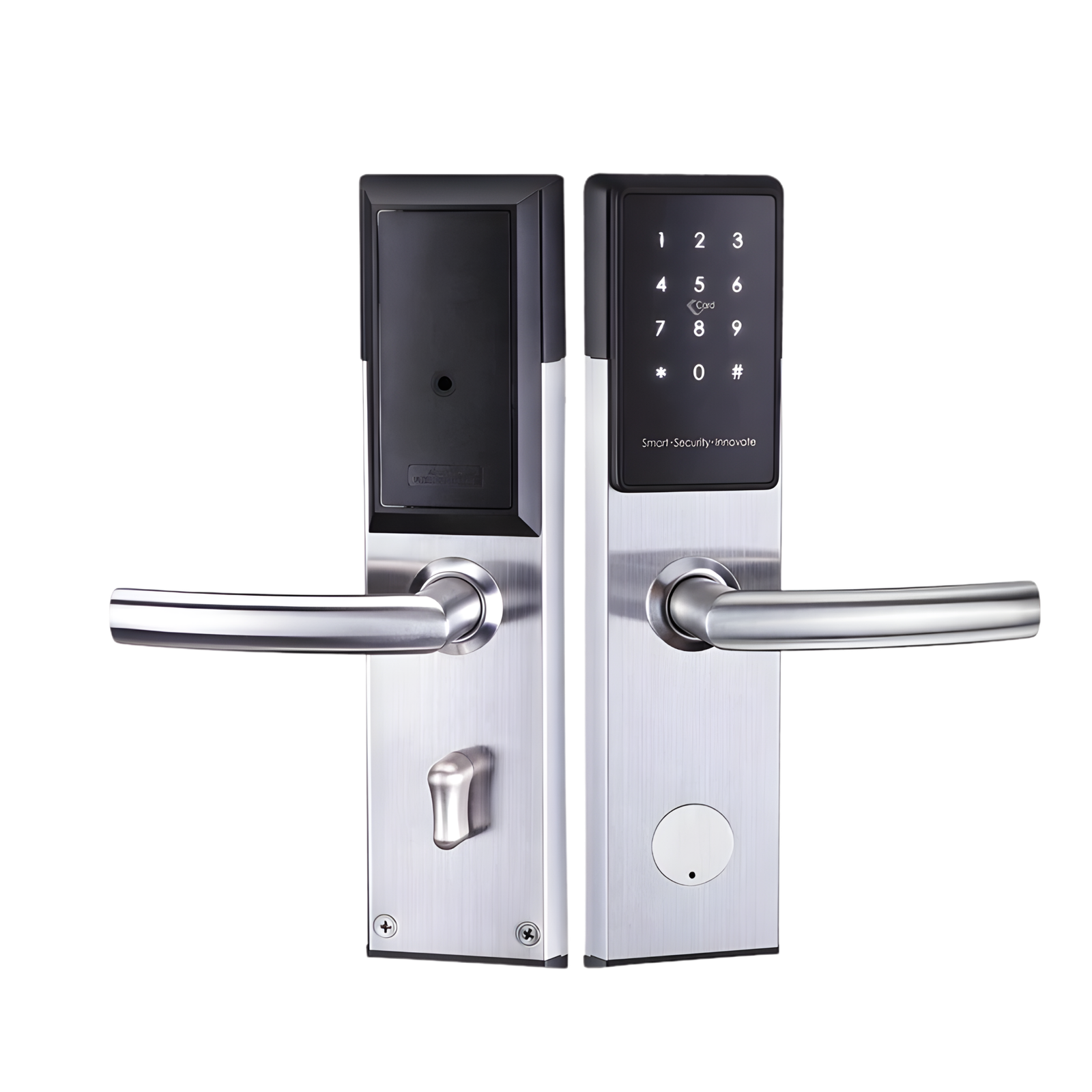
There’s a second constraint that matters more than corrosion. Cutting a fire-rated door usually voids its fire certification. Building management in a managed community can, and does, object. If the door is certified and you want to keep the certificate intact, a euro-profile cylinder swap is the route, because it uses the existing hole and modifies nothing. The Altix CL1X at AED 504.99 does exactly that, adjustable from 60 mm to 90 mm, with the existing handle and mortise body left alone.
On a coastal steel gate, prime and paint every cut, use 316 fixings, and inspect the strike plate area twice a year. That’s where the water sits.
How much does UAE heat move an aluminium door?
Aluminium expands about 23 micrometres per metre for every degree Celsius. Steel moves roughly half as much.
Take a 2.2 metre aluminium door leaf. Between a 20°C January night and a 60°C surface temperature on a west-facing door in August, that’s a 40 degree swing, and the leaf grows around 2 mm in height. The frame moves too, but not by the same amount and not at the same time, because the frame sits in shade and is bolted to masonry while the leaf hangs in the sun.
Two millimetres is enough to shift a bolt off its strike pocket. On a coastal villa this stacks on top of the corrosion, and it explains the pattern we see most often: a lock that runs perfectly all winter and starts hesitating in July.
Handle it at install. Set the strike with clearance for movement, check the alignment again in the opposite season, and keep tight-tolerance latches off large sun-facing aluminium leaves.
Which door on a beach villa fails first?
Not the front door, usually.
The main entrance on most UAE beachfront villas faces the internal road, with the house itself acting as a windbreak between it and the water. The seaward doors are the terrace slider, the pool gate and the beach gate. Those are the ones taking direct aerosol, and those are the ones that get whatever hardware the landscaper had left over.
A rough ranking, worst first, for a typical Palm frond or Saadiyat beachfront plot:
| Position | Exposure | Door you’ll usually find | Usual mistake |
|---|---|---|---|
| Beach or pool gate, facing open water | Highest. Direct aerosol plus chlorinated splash | Frameless glass or aluminium picket | Cheapest hardware on the property |
| Seaward terrace slider | High. Aerosol, plus full sun most of the day | Aluminium framed glass slider | Swing-door lock bought by mistake |
| Side and service door | High. Sheltered, so salt never rinses off | Steel or aluminium | Assumed to be low risk because it’s shaded |
| Main entrance, landward | Moderate. Wind-carried salt on shamal days | Aluminium pivot or timber | Gets the whole budget |
| Internal courtyard door | Low for salt | Anything | Fine as it is |
Shade is the trap in that list. A covered side door keeps the sun off, which helps, but it also keeps the rain off, so the salt film builds up and never washes away. A sheltered coastal door can carry more chloride than an exposed one. Cover plus a fresh water wipe is the combination that works.
A worked example: one villa, two doors, eighteen months
This is the field pattern we see rather than a laboratory result, so treat the timings as what to expect and not as a specification.
A villa on a Palm Jumeirah frond. Powder-coated aluminium throughout. The main entrance faces the internal road at about 60 metres from the water. The pool gate is frameless glass, facing open water, at about 15 metres.
- Day one. Both doors get a weather-rated lock. Standard fixings from the box on both. Same installer, same afternoon. Nobody seals the drilled holes on the aluminium entrance, and the pool gate keeps its original 304 patch fitting.
- Month 3. Nothing visible on either. The entrance lock and the gate both work normally.
- Month 6. Fine rust weep under the patch fitting screws on the pool gate. The entrance door still looks perfect from outside, but bare aluminium inside the through-bolt holes has already started.
- Month 9. The gate latch needs a firmer push. Corrosion product has taken up the clearance in the patch fitting.
- Month 11. Hairline paint lifting around one through-bolt on the entrance door. Two thin threads, maybe 4 mm long. This is filiform corrosion and it’s the only warning you get.
- Month 13. Pool gate battery life drops from about eight months to under three. Salt bridging, plus a bolt fighting a misaligned strike.
- Month 15. The entrance door coating lifts in a patch roughly the size of a dirham around the top bolt. Now it needs a coating repair, not just a lock service.
- Month 18. Pool gate hardware replaced with a 316 patch fitting and 316 fixings. Entrance door lock removed, holes cleaned and sealed properly, isolating washers fitted, lock reinstalled. Same lock model on both, back in service.
Neither lock was at fault. Two doors, two materials, and one afternoon of installation that treated them as if they were the same job.
What does it cost?
| Line item | Cost |
|---|---|
| Altix CL1X TTLock smart cylinder, retrofit into existing euro cylinder | AED 504.99 |
| Altix GX Pro, for sliding and glass doors | AED 664.99 |
| Altix RX Ultra, IP66, aluminium body, for aluminium, wooden and metal swing doors | AED 764.99 |
| Altix WeatherShield, IP66, app, passcode, card and key | AED 834.99 |
| Professional cylinder lock installation, Dubai and Sharjah | AED 350 |
| Professional mortise lock installation, Dubai and Sharjah | AED 450 |
| 316 stainless fixing set plus nylon isolating washers, per door | Under AED 100 |
| Etch primer or marine sealant for drilled holes | Nominal, done at install |
| Upgrading a glass door patch fitting from 304 to 316 | We’ve seen AED 300 to 700 per leaf quoted by glass contractors. Confirm with yours, since it depends on the fitting |
Put the two numbers side by side. Under AED 100 of fixings plus five minutes of sealing at install, against a coating repair on a coastal aluminium door leaf, which starts in the high hundreds and climbs fast if the whole leaf needs recoating. On the frontage there’s no argument to have.
Which locks do we recommend, by door material?
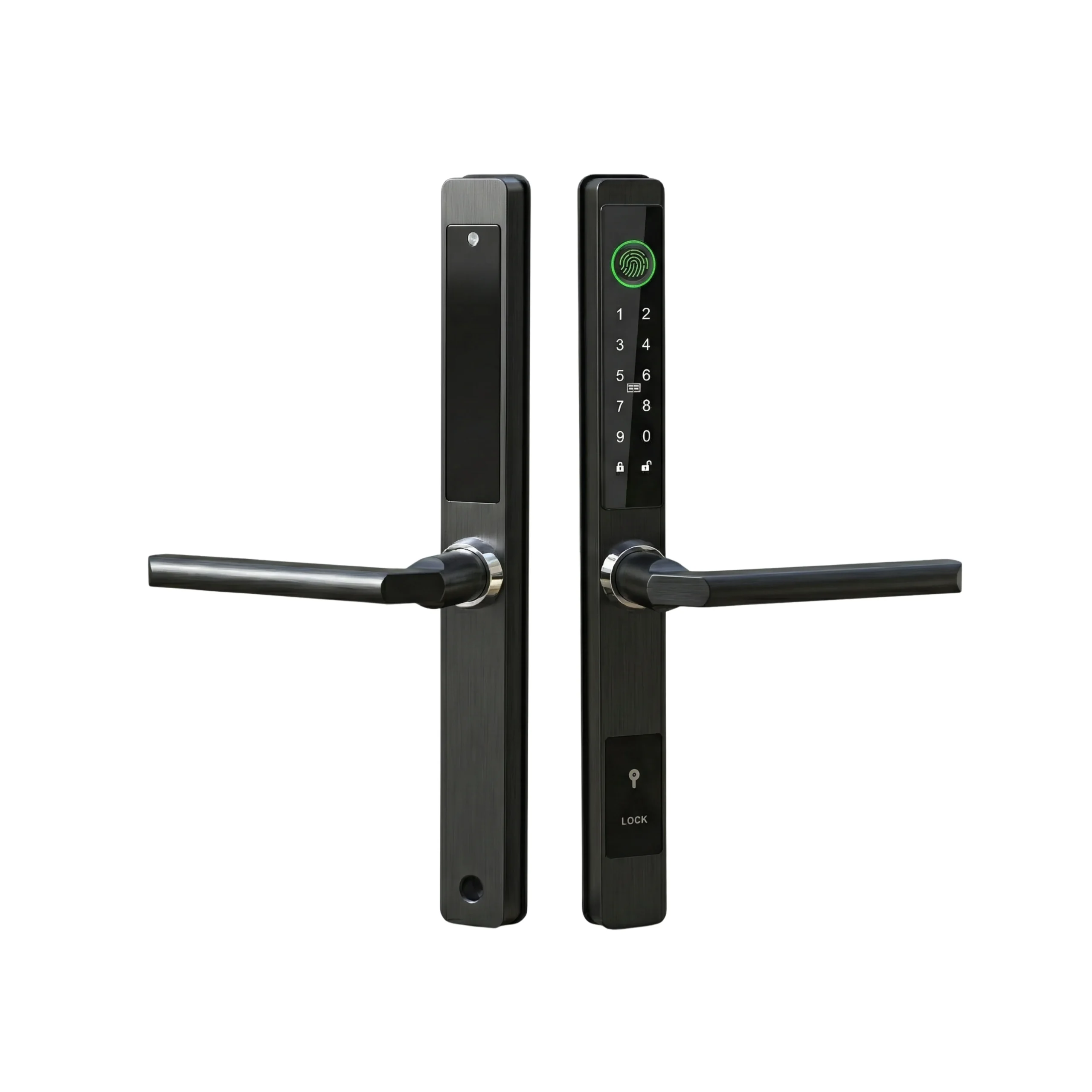
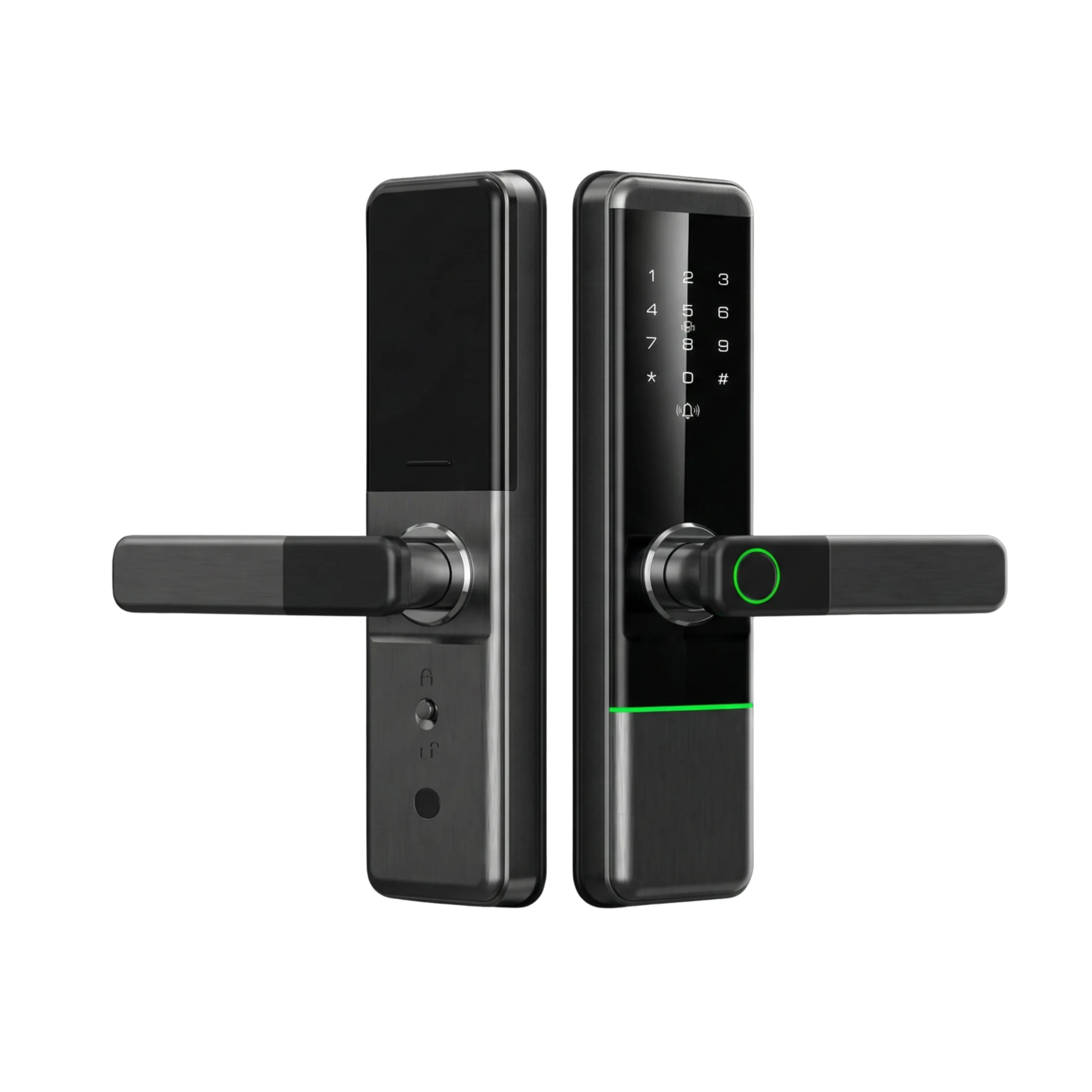
Aluminium and timber swing doors on the frontage: the Altix RX Ultra at AED 764.99. IP66, aluminium body, fingerprint, PIN, RFID, mechanical key and app, and it ships with a 2585 mortise. It won’t fit a sliding door, and you need to check your door’s lock body depth and centre alignment before ordering.
Exposed doors where you want card and code rather than a fingerprint sensor: the Altix WeatherShield at AED 834.99. App, passcode, RFID card and mechanical key, auto-lock, anti-tamper alerts, Type-C emergency power. No fingerprint reader. On a seaward door that’s less of a loss than it sounds, since salt film, sunscreen and wet fingers all defeat capacitive sensors anyway.
Sliding and glass terrace doors: the Altix GX Pro at AED 664.99.
Fire-rated steel and uPVC doors you don’t want to cut: the Altix CL1X at AED 504.99, which reuses the existing cylinder hole.
Two limits we’ll state plainly. None of these models publishes ASTM B117 salt-spray hours, and none carries a marine or C5 corrosion certification, so we won’t quote figures we can’t put in front of you. The supplier request for that data and for operating temperature and humidity ranges is already in. The second limit is bigger: no lock on the market rescues a badly prepared door. On the frontage, the fixings, the sealing and the strike alignment decide more than the model does.
How can Altix help?
Message us on WhatsApp with a photo of the door, the material, roughly how far it sits from the water and which way it faces. From that we can usually tell you which lock format fits, what your installer needs to seal, and whether the door needs a weather-rated unit at all. A fair number of villa doors sit on the sheltered side, and a standard indoor lock does the job there.
We supply, install and service smart locks across Dubai, Abu Dhabi, Sharjah and Ras Al Khaimah, including the coastal communities where door material makes the difference. Our installers carry 316 fixings and isolating washers on coastal jobs as standard, because we’ve seen what happens when they don’t.
Frequently asked questions
Will a smart lock damage my aluminium villa door?
Not if the cuts are sealed. The lock itself does nothing to the door. The risk is bare aluminium exposed inside drilled holes and the mortise pocket, which on a coastal property becomes a filiform corrosion start point. Ask your installer directly whether they seal cut edges. If they look puzzled by the question, that’s your answer.
My villa door is anodised, not powder coated. Is that better near the sea?
Generally yes, provided the anodising is thick. Marine specifications call for around 25 microns. Anodising is an integral oxide layer rather than a film sitting on top, so it doesn’t lift and creep the way a powder coat does. The cut you make for the lock is still bare metal either way, so seal it regardless.
Can I put a smart lock on a frameless glass pool gate?
Yes, but the lock has to suit a patch fitting rather than a door leaf, and the hardware grade decides the outcome. Ask for 316 stainless patch fittings and fixings. If the existing fitting is 304 and already showing rust weep, replace the fitting at the same time as the lock. Doing the lock alone means coming back.
Which is better on the coast, aluminium or timber?
Aluminium, for durability, which is why it’s the default on Palm Jumeirah and Saadiyat villas. Timber gives you the entrance look some owners want and it’s perfectly workable if all six faces are sealed and resealed, but it needs maintenance that aluminium doesn’t. From the lock’s point of view, aluminium’s problem is chemical and timber’s is dimensional.
My smart lock works fine in winter and struggles in summer. Why?
Usually thermal movement rather than a fault. An aluminium leaf grows roughly 2 mm in height across a 40 degree temperature swing, and the frame doesn’t move with it, so the bolt starts catching the edge of the strike pocket. Get the strike alignment checked in the hot season rather than the cool one. Salt corrosion in the mechanism produces a similar symptom, so have the installer rule both in or out on the same visit.
Does my building or community need to approve this?
On a villa, usually not, though some managed communities have rules about external hardware and any change to a fire-rated door. Cutting a certified fire door can void its certification. We’ve covered the approval side in our guide to getting a smart lock past your Dubai developer.
How often should I check a coastal door lock?
Wipe the lock with a damp cloth monthly on the frontage, quarterly further back, since chloride is water soluble and a wipe removes the film driving the corrosion. Beyond that, check the strike alignment and the fixings twice a year, once in peak summer and once in winter. Our maintenance guide covers the rest of the routine.
If you’ve got a beachfront door and you’re not sure what it needs, send us a photo, the door material and the distance to the water on WhatsApp. We’ll tell you what fits, what to seal, and when the honest answer is that your door doesn’t need an upgrade at all.


